Synopsis
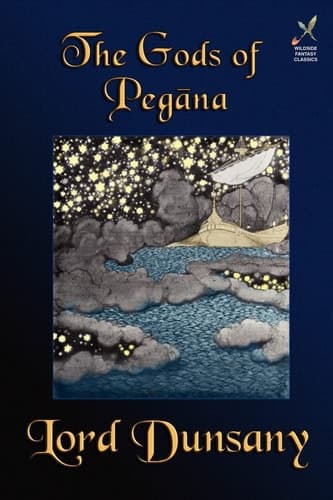
THE GODS OF PEGANA is a rich tapestry of imaginative fantasy, one of the landmark collections of short stories from the early 20th century, and a tremendous influence on writers ranging from H.P. Lovecraft to Ursula K. LeGuin. "Dunsany was the second writer (William Morris in the 1880s being the first) fully to exploit the possibilities of . . . adventurous fantasy laid in imaginary lands, with gods, witches, spirits, and magic, like children's fairy tales but on a sophisticated adult level." -- L. Sprague de Camp. "[Dunsany's] rich language, his cosmic point of view, his remote dream-worlds, and his exquisite sense of the fantastic, all appeal to me more than anything else in modern literature." --H. P. Lovecraft
Recommendations
Generating recommendations…
Our AI is preparing recommendations for The Gods of Pegana. This usually takes under a minute.
About Lord Dunsany
L
Lord Dunsany
1878–1957
Edward John Moreton Drax Plunkett was born in Ireland, the first son of John William Plunkett, 17th Baron of Dunsany and Ernle Elizabeth Louisa Maria Grosvenor Ernle-Erle-Drax. He spent his childhood at several family properties, including Dunstall Priory in Shoreham, Kent, Dunsany Castle in County Meath, as wells as other family homes such as in London. His schooling was at Cheam, Eton and finally Sandhurst, which he entered in 1896. He became the 18th Baron of Dunsany when his father died in 1899, and he returned to Dunsany Castle in 1901 after war duty. He married Lady Beatrice Child Villiers in 1904. Their child, Randal, was born in 1906. Edward Plunkett was a writer and dramatist, notable for his work, mostly in fantasy, which he published under the name Lord Dunsany. More than eighty books of his work were published, and his oeuvre includes many hundreds of published short stories, as well as successful plays, novels and essays.
View author page