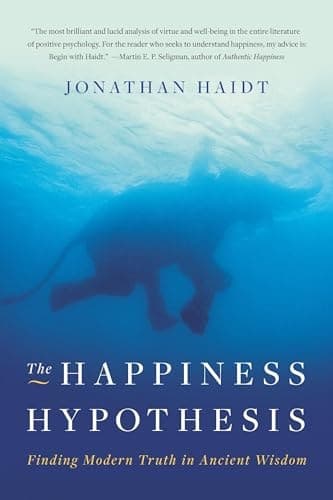
The Happiness Hypothesis Finding Modern Truth in Ancient Wisdom
Jonathan HaidtPublished2006
Pages320
Formatpaperback
PublisherBasic Books
Synopsis
The bestselling author of The Righteous Mind and The Coddling of the American Mind draws on philosophical wisdom and scientific research to show how the meaningful life is closer than you think
The Happiness Hypothesis is a book about ten Great Ideas. Each chapter is an attempt to savor one idea that has been discovered by several of the world's civilizations -- to question it in light of what we now know from scientific research, and to extract from it the lessons that still apply to our modern lives and illuminate the causes of human flourishing.
Award-winning psychologist Jonathan Haidt, the author of The Righteous Mind and The Coddling of the American Mind, shows how a deeper understanding of the world's philosophical wisdom and its enduring maxims -- like "do unto others as you would have others do unto you," or "what doesn't kill you makes you stronger" -- can enrich and even transform our lives.
Recommendations
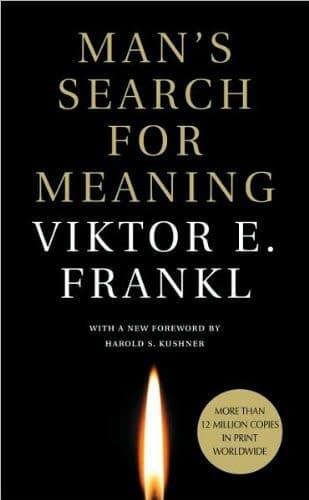
Man's Search for Meaning
by Viktor E. Frankl
Frankl, a Holocaust survivor and psychiatrist, does exactly what Haidt does but from lived experience rather than research synthesis—he extracts meaning from extreme suffering and builds a philosophy around it. Where Haidt examines 'what doesn't kill you makes you stronger' as an idea, Frankl lived it and developed logotherapy as a direct response, making this feel like the existential companion piece to Haidt's more empirical approach.
View book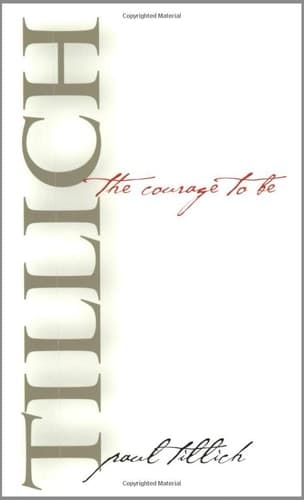
The Courage to be
by Paul Tillich
This Japanese dialogue between a philosopher and a young man tackles Adlerian psychology through Socratic conversation—it's Haidt's structure (big ideas examined through modern lens) but filtered through a completely different cultural and psychological tradition. You'll recognize the pattern of questioning assumptions, but the answers often diverge in fascinating ways, especially around relationships and self-worth.
View book
Thinking Past Terror Islamism and Critical Theory on the Left
by Susan Buck-Morss
Kahneman takes the scientific rigor Haidt uses to validate ancient wisdom and goes deeper into the cognitive machinery itself—how we actually think versus how we believe we think. If Haidt showed you that Stoicism works, Kahneman explains the neuroscience of *why* it works, with the same accessible-but-substantive writing style that makes complex ideas feel inevitable rather than abstract.
View book
The Apocalyptic Vision of Mikhail Bulgakov's the Master and Margarita (Studies in Slavic Language & Literature)
by Edward E. Ericson
Here's the curveball: a 1960s Soviet satirical novel that's actually a profound meditation on good, evil, faith, and human nature through magical realism. Where Haidt examines ancient ideas about morality and meaning, Bulgakov *dramatizes* them through a story where the Devil visits Moscow—you'll find yourself wrestling with the same philosophical questions, but through narrative rather than argument, which hits differently.
View book
The Elephant in My Living Room
by Marlane Renner
Hanson takes Haidt's willingness to question comfortable assumptions and applies it to our hidden motivations—the things we don't admit even to ourselves. It's the skeptical counterpart to Haidt's synthesis of wisdom; where Haidt asks 'what can ancient philosophy teach us?', Hanson asks 'what are we really doing when we think we're being virtuous?'—complementary investigations into human nature from different angles.
View bookAbout Jonathan Haidt
J
Jonathan Haidt
Born 1963
Jonathan David Haidt (/haɪt/; born October 19, 1963) is an American social psychologist, Professor of Ethical Leadership at New York University Stern School of Business,[1] and author. His main areas of study are the psychology of morality and moral emotions. Haidt's main scientific contributions come from the psychological field of moral foundations theory,[2] which attempts to explain the evolutionary origins of human moral reasoning on the basis of innate, gut feelings rather than logical reason.[3] The theory was later extended to explain the different moral reasoning and how they relate to political ideology, with different political orientations prioritizing different sets of morals.[4] The research served as a foundation for future books on various topics. Haidt has written three books for general audiences, including: The Happiness Hypothesis: Finding Modern Truth in Ancient Wisdom (2006) explores the relationship between ancient philosophies and modern science;[5] The Righteous Mind: Why Good People are Divided by Politics and Religion (2012) examines how morality is shaped by emotion and intuition more than by reasoning, and why differing political groups have different notions of right and wrong;[6] and The Coddling of the American Mind: How Good Intentions and Bad Ideas Are Setting Up a Generation for Failure (2018), co-written with Greg Lukianoff, explores the rising political polarization and changing culture on college campuses, and its effects on mental health. Haidt has attracted both support and criticism for his critique of the current state of universities and his interpretation of progressive values.[7] He has been named one of the "top global thinkers" by Foreign Policy magazine, and one of the "top world thinkers" by Prospect magazine.[8][9] He is among the most cited researchers in political and moral psychology, and is considered among the top 25 most influential living psychologists
View author page