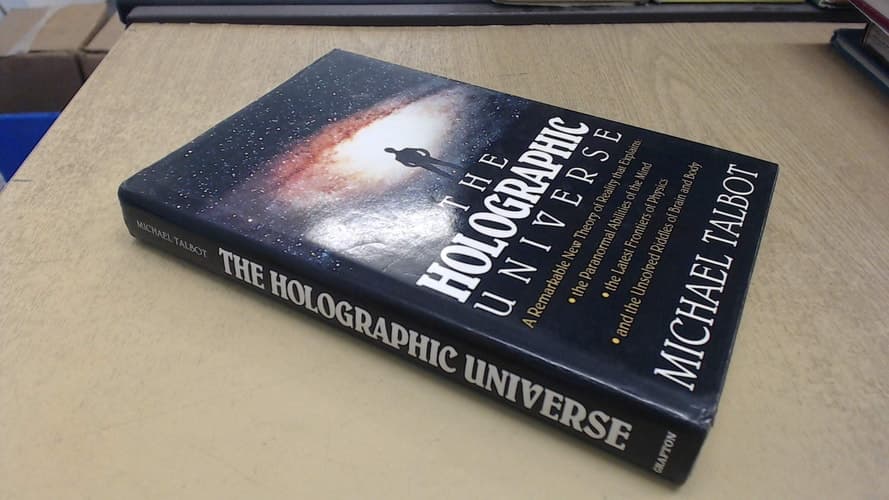
Synopsis
Explains the theory presented that the universe itself may be a giant hologram, explores other researchers who support the idea, and how the range of mystical and psychic experience makes sense.
Recommendations
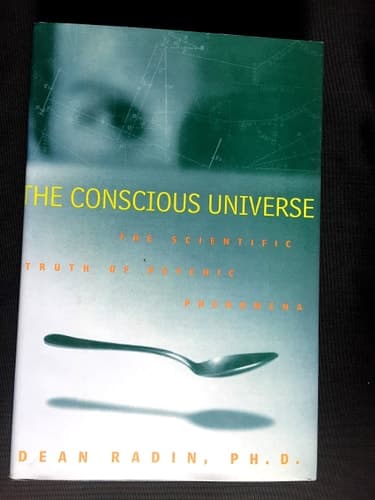
The Conscious Universe The Scientific Truth of Psychic Phenomena
by Dean I. Radin
Radin takes the quantum mechanics angle that Talbot explores and grounds it in rigorous experimental parapsychology—he's essentially asking 'if the universe is holographic, what would we actually measure in a lab?' You'll recognize the same cast of physicists and researchers, but now filtered through decades of controlled studies that either support or complicate the theory in fascinating ways.
View book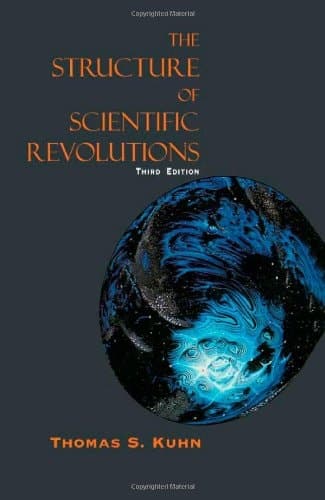
The Structure of Scientific Revolutions
by Thomas S. Kuhn
Published in 1962, this is the intellectual ancestor of why Talbot's holographic universe even *matters*—Kuhn explains how paradigm shifts happen in science, which is exactly what Talbot is arguing for. Reading this first will make you understand not just *what* the holographic theory claims, but *why* the scientific establishment resists it, and how that resistance itself follows predictable patterns.
View book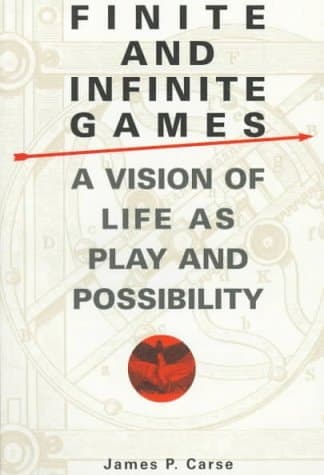
Finite and Infinite Games
by James P. Carse
This is the curveball recommendation—it's a philosophical meditation disguised as a business parable, but it shares Talbot's obsession with how reality itself might operate under different rules than we assume. Carse plays with the idea that existence itself might be a game with hidden parameters, and the prose has that same mind-bending quality where each page reframes everything you thought you understood.
View book
The Elegant Universe: Superstrings, Hidden Dimensions, and the Quest for the Ultimate Theory
by Brian Greene
Greene does for string theory what Talbot does for the holographic principle—he makes cutting-edge theoretical physics accessible without dumbing it down. Where Talbot synthesizes existing research into a unified vision, Greene walks you through the actual mathematics and competing theories that physicists are still debating, giving you the technical scaffolding beneath Talbot's more speculative framework.
View book
The Apocalyptic Vision of Mikhail Bulgakov's the Master and Margarita (Studies in Slavic Language & Literature)
by Edward E. Ericson
Here's where things get strange: this 1967 Soviet novel is a narrative that *enacts* the holographic principle rather than explaining it—reality fractures, multiple timelines bleed into each other, and the Devil walks through Moscow causing ontological chaos. If Talbot convinced you the universe might be fundamentally illusory, Bulgakov shows you what that actually *feels* like from inside the illusion, with dark humor and genuine philosophical depth.
View bookAbout Michael Talbot
M
Michael Talbot
Born 1953
Biography coming soon.
View author page