Synopsis
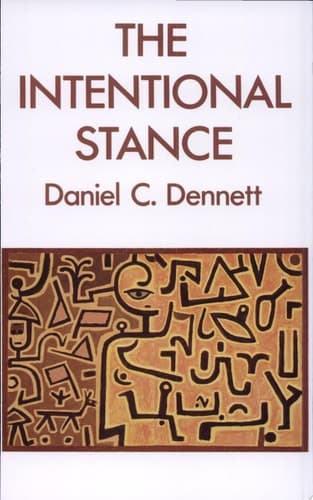
How are we able to understand and anticipate each other in everyday life, in our daily interactions? Through the use of such "folk" concepts as belief, desire, intention, and expectation, asserts Daniel Dennett in this first full-scale presentation of a theory of intentionality that he has been developing for almost twenty years. We adopt a stance, he argues, a predictive strategy of interpretation that presupposes the rationality of the people—or other entities—we are hoping to understand and predict.These principles of radical interpretation have far-reaching implications for the metaphysical and scientific status of the processes referred to by the everday terms of folk psychology and their corresponding terms in cognitive science.While Dennett's philosophical stance has been steadfast over the years, his views have undergone successive enrichments, refinements, and extensions. The Intentional Stance brings together both previously published and original material: four of the book's ten chapters—its first and the final three—appear here for the first time and push the theory into surprising new territory. The remaining six were published earlier in the 1980s but were not easily accessible; each is followed by a reflection—an essay reconsidering and extending the claims of the earlier work. These reflections and the new chapters represent the vanguard of Dennett's thought. They reveal fresh lines of inquiry into fundamental issues in psychology, artificial intelligence, and evolutionary theory as well as traditional issues in the philosophy of mind.
A Bradford Book.
Recommendations
Generating recommendations…
Our AI is preparing recommendations for The Intentional Stance. This usually takes under a minute.
About Daniel C. Dennett
D
Daniel C. Dennett
1942–2024
Daniel Clement Dennett III was an American philosopher, writer, and cognitive scientist whose research centered on the philosophy of mind, philosophy of science, and philosophy of biology, particularly as those fields relate to evolutionary biology and cognitive science. Dennett was the co-director of the Center for Cognitive Studies and the Austin B. Fletcher Professor of Philosophy at Tufts University in Massachusetts. Dennett was a vocal atheist and secularist, a member of the Secular Coalition for America advisory board, and a member of the Committee for Skeptical Inquiry, as well as an outspoken supporter of the Brights movement. Dennett was referred to as one of the "Four Horsemen of New Atheism", along with Richard Dawkins, Sam Harris, and the late Christopher Hitchens. In 1962, Dennett married Susan Bell. They lived in North Andover, Massachusetts, and had a daughter, a son, and six grandchildren. He was an avid sailor. Dennett died of interstitial lung disease at Maine Medical Center on April 19, 2024, at the age of 82. [source: Wikipedia]
View author page