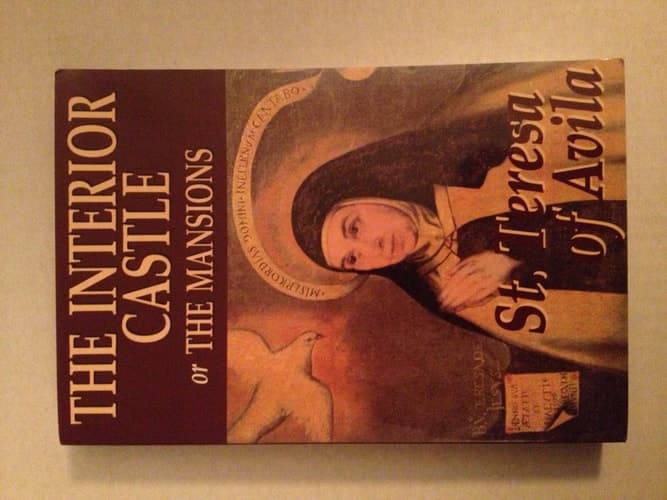
The Interior Castle, Or, The Mansions
Saint Teresa of AvilaPublished1997
Pages307
Formatpaperback
PublisherTan Books and Publishers
Synopsis
A translation of the classic spiritual work is based on the author's mystical vision of a crystal castle with seven chambers, each representing a different stage in a soul's quest for union with God.
Recommendations

The Cloud of Unknowing
by Anonymous
This medieval contemplative classic shares Teresa's architectural approach to spiritual ascent—both texts use spatial metaphors to map the soul's journey toward divine union. Where Teresa gives you seven chambers to navigate, the anonymous author describes layers of consciousness you must penetrate, and both demand that you sit with paradox and unknowing as essential spiritual tools rather than obstacles to overcome.
View book
The Struggle for Life A Companion to William James's The Varieties of Religious Experience
by Donald Capps
James was fascinated by exactly the kind of first-person mystical accounts Teresa provides, and he structures his psychological investigation of religious experience around case studies that echo her interior castle metaphor—different chambers of consciousness, different pathways to transcendence. This 1902 work gives you the philosophical scaffolding for understanding what Teresa was actually describing, without diminishing the mystery.
View book
The Way of a Pilgrim ; And, The Pilgrim Continues His Way
by Anonymous Pilgrim
This Russian Orthodox spiritual memoir mirrors Teresa's intimate, practical approach to prayer and inner transformation—both authors are less interested in theology as abstraction and more obsessed with the actual mechanics of how a soul moves closer to God. The pilgrim's repetitive prayer practice and Teresa's chamber-by-chamber progression both suggest that spiritual progress isn't sudden illumination but patient, methodical deepening.
View book
The Apocalyptic Vision of Mikhail Bulgakov's the Master and Margarita (Studies in Slavic Language & Literature)
by Edward E. Ericson
This might seem like a left turn, but Bulgakov's novel is fundamentally about spiritual reality pressing through material reality—much like Teresa's crystal castle existing within the soul. The novel's nested narratives (a story within a story within a story) create the same sense of ascending through chambers of meaning that Teresa describes, except Bulgakov uses satire and the grotesque where Teresa uses prayer, making the invisible world feel equally urgent and real.
View book
The Practice of the Presence of God Based on the Conversations, Letters, Ways, and Spiritual Principles of Brother Lawrence, as Well as on the Writings of Joseph de Beaufort
by Brother Lawrence (of the Resurrection)
Where Teresa maps the soul's journey architecturally, Brother Lawrence—a 17th-century lay monk—shows you how to live in continuous communion with God through the mundane work of washing dishes. His letters and conversations are Teresa's interior castle brought down to earth: same destination (union with God), radically different entry point (not mystical visions but kitchen labor). Together they suggest spiritual transformation isn't reserved for contemplatives alone.
View bookAbout Saint Teresa of Avila
S
Saint Teresa of Avila
1515–1582
Also known as Teresa of Jesus. Spanish mystic and Roman Catholic saint who founded the religious Order of the Discalced Carmelites (OCD, for its initials in Spanish) with St. John of the Cross and wrote "The Interior Castle," "The Way of Perfection," and an autobiography
View author page