The Italian Metamorphosis, 1943-1968
Germano CelantPublished1994
Pages700
Formathardcover
PublisherHarry N. Abrams
Synopsis
Hard cover with dust jacket. Guggenheim museum exhibition by famed curator Germano Celant.
Recommendations
The Architecture of Happiness
by Alain De Botton
De Botton examines how design and architecture shape human experience and culture—much like Celant's exhibition traces how Italian visual culture transformed a nation's identity. Both writers treat aesthetic movements as windows into broader social upheaval, and de Botton's accessible, essayistic approach mirrors the curatorial voice that guides you through Celant's carefully selected works.
View book
The Savage Detectives A Novel
by Roberto Bolaño
Bolaño's sprawling novel captures the artistic underground of Latin America in the 1970s with the same obsessive attention to marginal movements and countercultural ferment that Celant brings to postwar Italian art. The book reads like a curator's fever dream—fragmented, digressive, but ultimately mapping how avant-garde communities actually lived and thought during transformative decades.
View book
Invisible Cities
by Italo Calvino
Here's your surprise recommendation: a philosophical fiction that's deeply Italian and deeply concerned with how we imagine and describe places. Calvino's fragmented, poetic meditation on cities and memory complements Celant's exhibition by offering the literary counterpart to what those visual artists were attempting—breaking down how we perceive reality itself. It's a palate cleanser that still speaks to the same cultural moment.
View book
Art Since 1900: 1900-1944
by Hal Foster
Foster's comprehensive survey picks up where Celant's exhibition ends, providing the historical scaffolding and theoretical framework for understanding postwar Italian art within global modernism. Unlike a dry textbook, Foster writes with genuine argumentative force—he's not just cataloging movements but making claims about what mattered and why, which deepens your engagement with the works Celant selected.
View book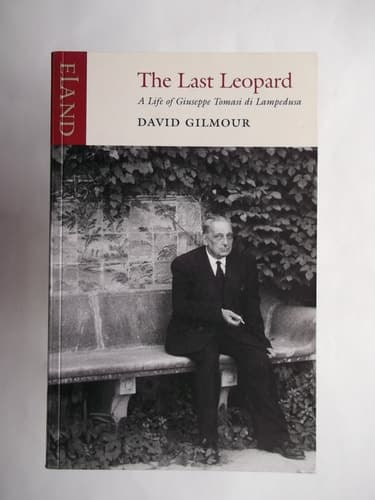
The Last Leopard: A Life of Giuseppe Tomasi di Lampedusa
by David Gilmour
Published in 1958 (a decade before your source book), this novel captures the anxious elegance of Italian society undergoing radical transformation—the same cultural moment Celant's artists were responding to visually. Lampedusa's prose has the precision and restraint of a curator's eye, and reading it alongside the exhibition gives you the sensory and emotional texture of the world those artists inhabited.
View bookAbout Germano Celant
G
Germano Celant
1940–2020
Italian art critic
View author page