
Synopsis
The pages of these five journals covering the years 1843 to 1847 are filled with Ralph Waldo Emerson’s struggle to formulate the true attitude of the scholar to the vexing question of public involvement. Pulled between his belief that a disinterested independence was a requisite for the writer and the public demands heaped upon him as a leading intellectual figure, he notes to himself that he “pounds…tediously” on the “exemption of the writer from all secular works.”
Although Emerson concluded his editorship of The Dial in 1844, he was continually beset by calls for public service, most of which drew their impetus from the reformist syndrome of the 1840s. In response to such issues as the Temperance Movement, the utopian communities, and Henry Thoreau’s experiment in self-reliance at Walden Pond, Emerson exercised sympathetic skepticism and held a growing conviction that the society of the day was not the lost cause many of his contemporaries believed it to be.
These journals record Emerson’s optimistic attitudes and show how later they existed side-by-side with concerns that, under the impulse of abolition, Texas, and the Mexican War, led him to some bitter conclusions about the state of the nation. Thoreau’s refusal to pay his poll tax in demonstration against slavery and the war particularly horrified him, and he confides in his journal that Thoreau’s action diverted attention from the possibility of real reform.
The moral ambivalence and cynicism of the day strengthened Emerson’s belief that the self-reliant individual was the only answer. These individuals―men like Garrison, Phillips, and Carlyle―were, in Emerson’s estimation, destined to set the standards by which society would be judged. Encouraged by the prospective publication of his first volume of poetry in 1846, Emerson also spent much of this period composing verse. Among the poems in these journals are “Uriel,” “Merlin,” “Ode to Beauty,” and a section from “Initial, Daemonic, and Celestial Love.”
In anticipation of his second visit to Europe, Emerson began preparing a lecture series on “Mind and Manners of the Nineteenth Century.” In these lectures he would take to the Old World his observations on the complexities of the times.
Recommendations
Generating recommendations…
Our AI is preparing recommendations for The Journals and Miscellaneous Notebooks of Ralph Waldo Emerson. This usually takes under a minute.
About Ralph Waldo Emerson
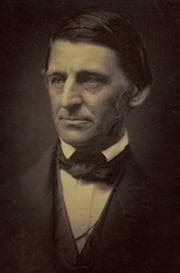
Ralph Waldo Emerson
1803–1882
Ralph Waldo Emerson was an American philosopher, essayist, and poet, best remembered for leading the Transcendentalist movement of the mid-19th century. His teachings directly influenced the growing New Thought movement of the mid-1800s. He was seen as a champion of individualism and a prescient critic of the countervailing pressures of society. Emerson gradually moved away from the religious and social beliefs of his contemporaries, formulating and expressing the philosophy of Transcendentalism in his 1836 essay, Nature. As a result of this ground-breaking work he gave a speech entitled The American Scholar in 1837, which Oliver Wendell Holmes, Sr. considered to be America's "Intellectual Declaration of Independence". Considered one of the great orators of the time, Emerson's enthusiasm and respect for his audience enraptured crowds. His support for abolitionism late in life created controversy, and at times he was subject to abuse from crowds while speaking on the topic. When asked to sum up his work, he said his central doctrine was "the infinitude of the private man." ([Source][1]) [1]: http://en.wikipedia.org/wiki/Ralph_Waldo_Emerson
View author page