Synopsis
“Practically alone among the American writers of his generation, [Sinclair] put to the American public the fundamental questions raised by capitalism in such a way that they could not escape them.” —Edmund Wilson
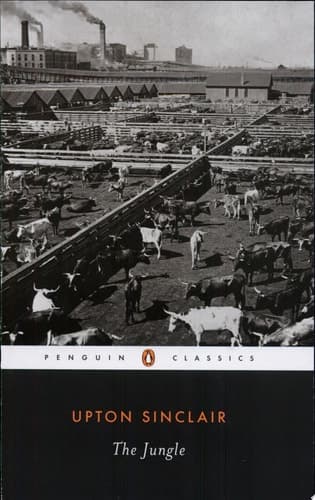
When it was first published in 1906, The Jungle exposed the inhumane conditions of Chicago’s stockyards and the laborer’s struggle against industry and “wage slavery.” It was an immediate bestseller and led to new regulations that forever changed workers’ rights and the meatpacking industry. A direct descendant of Dickens’s Hard Times, it remains the most influential workingman’s novel in American literature.
For more than seventy years, Penguin has been the leading publisher of classic literature in the English-speaking world. With more than 1,700 titles, Penguin Classics represents a global bookshelf of the best works throughout history and across genres and disciplines. Readers trust the series to provide authoritative texts enhanced by introductions and notes by distinguished scholars and contemporary authors, as well as up-to-date translations by award-winning translators.
Recommendations
Generating recommendations…
Our AI is preparing recommendations for The Jungle. This usually takes under a minute.
About Upton Sinclair
U
Upton Sinclair
1878–1968
Upton Sinclair, Jr., was a Pulitzer Prize-winning American author who wrote over 90 books in many genres. He achieved popularity in the first half of the 20th century, acquiring particular fame for his 1906 muckraking novel The Jungle. It exposed conditions in the U.S. meat packing industry, causing a public uproar that contributed in part to the passage a few months later of the 1906 Pure Food and Drug Act and the Meat Inspection Act. --Wikipedia
View author page