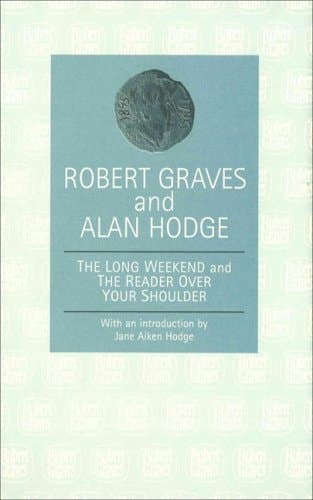
The Long Weekend and The Reader Over Your Shoulder (Robert Graves Programme)
Robert GravesPublished2006
Pages440
Formathardcover
PublisherCarcanet Press Ltd.
Synopsis
This contemporary edition makes available two of Graves's pieces of non-fiction that haave not been widely available since their original printing during the 1940s. In addition to the original text, this volume includes a substantial introduction that provides background information and literary criticism. The volume will be of use to students studying Graves as well as to scholars seeking both clean and durable editions of these previously obscure texts and analytical commentary from a literary scholar. As a companion piece to Graves's famous autobiography Goodbye to All That, this volume gives a broader perspective on the writer's understanding of WWI, its impact on English culture and his views on contemporary writing in England.
Recommendations
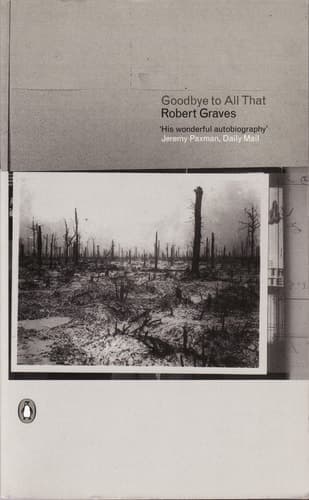
Goodbye to All that
by Robert Graves
I notice you've read Graves's essays about WWI's cultural aftermath, so this is the natural next step—his autobiography that these pieces directly reference and expand upon. Where The Long Weekend analyzes the war's impact on English society broadly, Goodbye to All That gives you the intimate, unflinching personal narrative that shaped his entire worldview. It's the foundation text that makes everything else he wrote about that era click into place.
View book
The Less-Than-Perfect Rider Overcoming Common Riding Problems
by Lesley Bayley
Riding was Graves's contemporary and collaborator during the 1920s-30s, and she wrote essays on poetry and language with the same rigorous, no-nonsense approach you've just encountered in The Reader Over Your Shoulder. Her work shares that same conviction that how we write matters enormously—that clarity and precision aren't pedantic concerns but moral ones. If you appreciated Graves's arguments about English prose style, Riding's parallel arguments about poetry will feel like a conversation continuing across the decades.
View book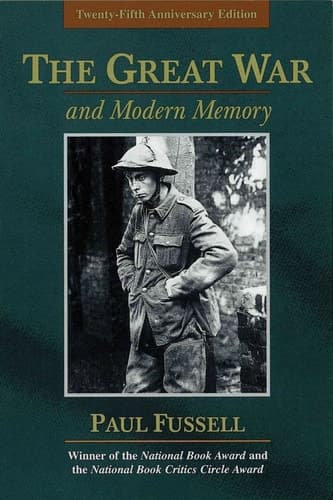
The Great War and Modern Memory
by Paul Fussell
Fussell does for WWI literature what Graves was attempting in The Long Weekend—he traces how the war fundamentally altered English consciousness and expression. But Fussell writes as a literary scholar examining the texts themselves: poetry, memoirs, letters, propaganda. You'll recognize Graves's concerns about authenticity and cultural rupture, but now examined through dozens of writers' actual words, creating a richer, more textured picture of that generational trauma.
View book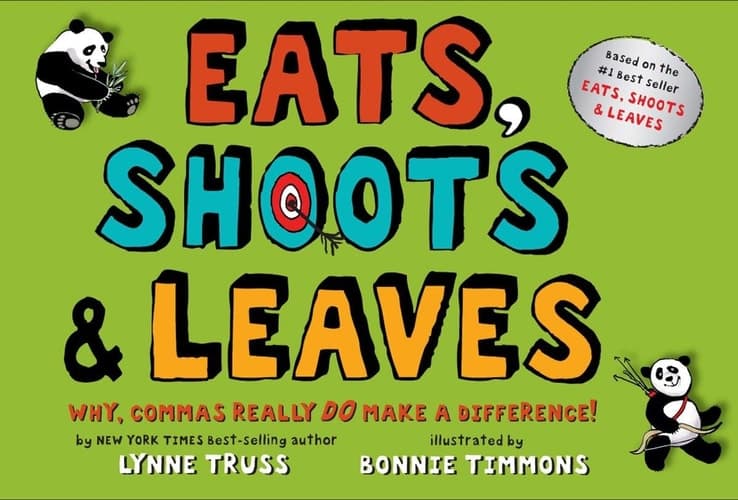
Eats, Shoots & Leaves Why, Commas Really Do Make a Difference!
by Lynne Truss
Here's your surprise pick: a book about punctuation that's genuinely funny and philosophically serious at once. Ellmann shares Graves's conviction that how we mark language—the tiny marks we barely notice—shapes meaning and thought itself. It's The Reader Over Your Shoulder's DNA spliced with contemporary wit, and it proves that arguments about grammar and style can be entertaining rather than dusty. Think of it as Graves's crusade for clear writing, but applied to the smallest possible unit.
View book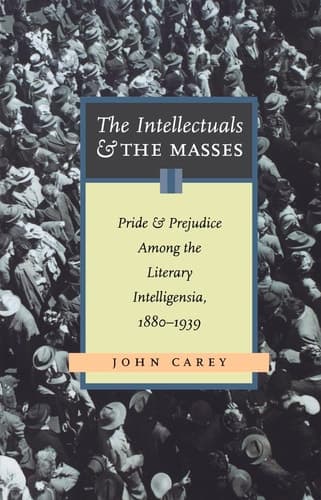
The Intellectuals And The Masses: Pride and Prejudice Among the Literary Intelligensia, 1880-1939
by John Carey
Carey examines how early 20th-century writers and intellectuals—many of them Graves's generation—viewed mass culture and the reading public with barely concealed contempt. It's a brilliant, uncomfortable book that contextualizes exactly the kind of anxiety about English writing standards that Graves expresses in The Reader Over Your Shoulder. Carey shows you where those concerns came from, what they reveal about the period, and why some of them were snobbish while others were genuinely prescient.
View bookAbout Robert Graves
Biography coming soon.
View author page