Synopsis
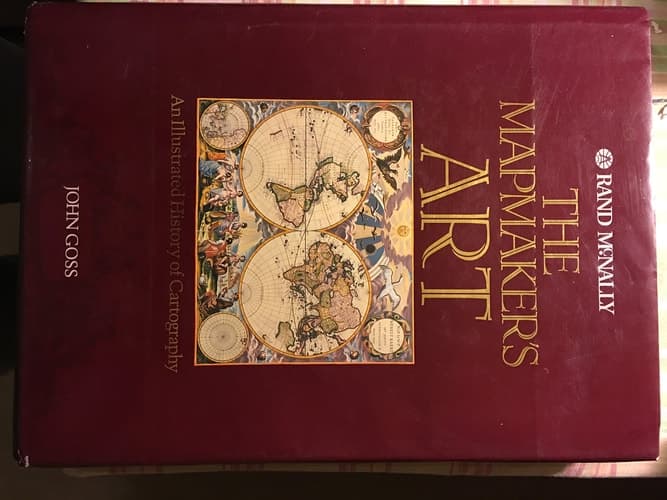
By taking a historical perspective, Goss is able to show how such important cartographers as Ptolemy, Mercator, Ortelius, and Jefferys artistically reflected the geographical learning of their own times, how the advent of printing increased the availability of accurate maps, and how the exploratory and expansionist activities of the western European nations expanded the functions of maps, which came to be used to delineate the boundaries of national and local government, mark trade routes and safe shipping lanes, and indicate sites of natural resources for development by new settlers. In addition to the European tradition, Goss also surveys the town plans of Imperial China, the star maps of 10th-century Arab astronomers, and the marine stick charts of the Pacific Islanders. Some of the more artistic flights of fancy, evident in elaborate allegorical figures and maps of mythical lands, are discussed in a chapter of their own.
Recommendations
Culinary Biographies A Dictionary of the World's Great Historic Chefs, Cookbook Authors and Collectors, Farmers, Gourmets, Home Economists, Nutritionists, Restaurateurs, Philosophers, Physicians, Scientists, Writers, and Others who Influenced the Way We Eat Today
by Alice Arndt
Where Goss traces how maps reflected expanding European knowledge, Wilkinson takes the complementary angle—showing how the physical infrastructure of roads shaped those same empires and trade networks. You'll find the same blend of technical history and cultural context, but told through the routes themselves rather than their representations.
View book
Simians, Cyborgs, and Women The Reinvention of Nature
by Donna Jeanne Haraway
Humboldt was obsessed with mapping not just geography but the relationships between climate, plants, and human settlement—he'd have been fascinated by the cartographers in Goss's book. Wulf's narrative captures that same moment when European explorers were radically expanding what could be known and represented, and how one brilliant mind tried to synthesize it all.
View book
The Savage Detectives A Novel
by Roberto Bolaño
This is your surprise pick—a sprawling, postmodern novel where two young poets wander through Mexico and Europe in the 1970s, and the narrative itself becomes a kind of map of literary movements, personal obsessions, and unmappable human experience. If you appreciated Goss's attention to how maps reveal what a culture values, Bolaño does something similar with narrative structure—showing how we try to chart the unmappable territory of meaning and connection.
View book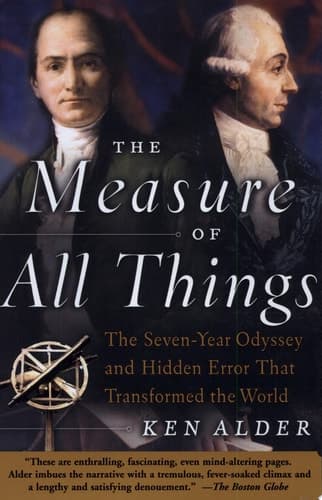
The Measure of All Things The Seven-Year Odyssey and Hidden Error That Transformed the World
by Ken Alder
Alder tells the story of the French scientists who measured the meridian to establish the meter—a project that required unprecedented precision in mapmaking and surveying. It's a page-turner about how accurate measurement became possible, which directly connects to Goss's point about printing and exploration enabling more reliable maps, but with the human drama and obsession front and center.
View book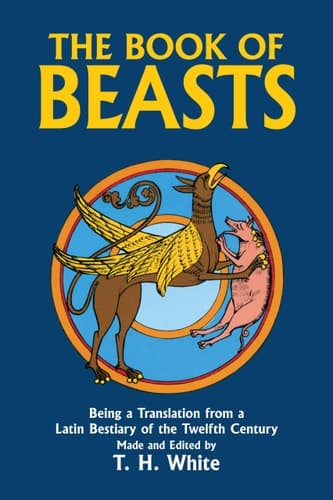
The Book of Beasts Being a Translation from a Latin Bestiary of the Twelfth Century
by Terence Hanbury White
Henderson's book echoes that wonderful chapter in Goss about mythical lands and allegorical figures—but he's doing it for real creatures we've only recently discovered or understood. It's part natural history, part philosophical meditation, and the writing has that same sense of wonder about how we represent and understand the world that drew you to Goss's discussion of maps as windows into different eras' imaginations.
View bookAbout John Goss
Biography coming soon.
View author page