The Millenium
Upton SinclairPublished2007
Pages256
Formathardcover
PublisherSynergy International of The Americas, Limited
Synopsis
In 1924 Upton Sinclair wrote this novel. The Millenium takes place in the year 2000. As capitalism reaches its apex, a 100-story Pleasure Palace is built in the middle of Central Park - New York City. It is built for the pleasure of the ruling class - pigs that they are! As the Palace has its 'grand opening' an experiment with radiumite goes real bad and it explodes killing everyone in the world except eleven people at the Palace. These eleven people are extremely wealthy and are incapable of living without luxury and servants. The group attempts to build a new capitalist society but it fails. Three of the survivors leave the Palace, led by Billy Kingdom and go to the Pocantico Hills above the Hudson River to create a utopian society known as the Co-operative Commonwealth. This novel is by far the most creative of Sinclair's writings as he envisions a truly near perfect society of people. It is an advneture de grandeur! A Collector's Edition.
Recommendations
Zamyatin: We
by Yevgeny Zamyatin
Zamyatin wrote this dystopian blueprint in 1924—the same year Sinclair was imagining his radiant future—and it's the spiritual ancestor of every utopia-gone-wrong narrative since. Where Sinclair shows us the collapse of capitalism through catastrophe, Zamyatin shows us how a 'perfected' society becomes its own prison, and both authors are wrestling with whether humans can actually be engineered into happiness.
View book
The New Utopian Politics of Ursula K. Le Guin's The Dispossessed
by Laurence Davis
Le Guin takes Sinclair's Co-operative Commonwealth concept and asks the harder questions: what does a truly anarchist society actually look like in practice, and what do its citizens sacrifice? She builds her utopia with the same earnest conviction Sinclair brings to his Pocantico Hills experiment, but she's unflinching about the contradictions and costs that emerge.
View book
Parable of the Sower
by Octavia E. Butler
Butler writes from the 1990s about a 2020s America fragmenting under climate collapse and inequality—she's doing what Sinclair attempted but with unflinching realism about how the marginalized actually survive systemic breakdown. Where Sinclair's eleven survivors are wealthy and helpless, Butler's protagonist is poor and resourceful, and she's building community from nothing rather than inheriting luxury.
View book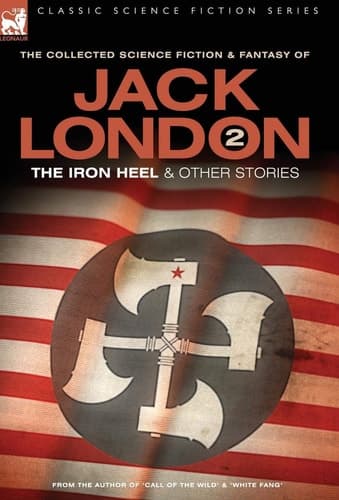
Jack London 2 - The Iron Heel and Other Stories
by Jack London
Here's a surprise: London was Sinclair's contemporary and fellow socialist, but where Sinclair imagines catastrophe as salvation, London imagines it as the birth of tyranny. This 1908 novel is structured as a discovered manuscript from a future oligarchic nightmare, and reading it alongside The Millenium shows you two radical writers in genuine disagreement about whether apocalypse liberates or enslaves.
View book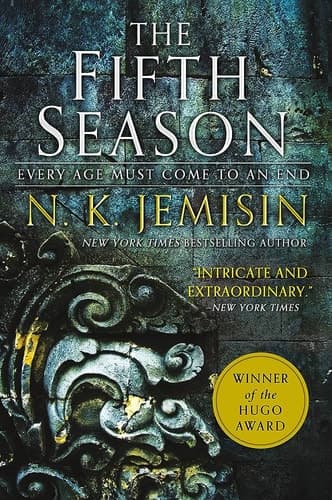
The Fifth Season
by N. K. Jemisin
This might seem like a genre departure—it's fantasy, not social realism—but Jemisin is doing exactly what Sinclair does: using speculative worldbuilding to ask whether hierarchy is inevitable or constructed. Her caste system and the way power reproduces itself across generations is political philosophy dressed in fantasy language, and the way she imagines resistance and survival mirrors Sinclair's faith that people can build something better.
View bookAbout Upton Sinclair
U
Upton Sinclair
1878–1968
Upton Sinclair, Jr., was a Pulitzer Prize-winning American author who wrote over 90 books in many genres. He achieved popularity in the first half of the 20th century, acquiring particular fame for his 1906 muckraking novel The Jungle. It exposed conditions in the U.S. meat packing industry, causing a public uproar that contributed in part to the passage a few months later of the 1906 Pure Food and Drug Act and the Meat Inspection Act. --Wikipedia
View author page