The Mind's Past
Michael S. GazzanigaPublished2002
Pages201
Formatpaperback
PublisherUniversity of California Press
Synopsis
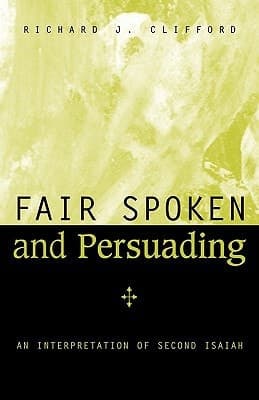
Within the last two hundred years, critical scholarship has come to recognize that Chapters 40-55 of the Book of Isaiah are the work, not of the eighth century Isaiah of Jerusalem, but of an anonymous sixth century disciple standing in the Isaiah tradition. This "Second Isaiah" spoke to a community who had once lived in Judah and Jerusalem, but now, a half century later, were settled in Babylon. Critical scholarship ?discovered? Second Isaiah through its scientific methods. The successive fads and fashions of that scholarship -- source criticism, then form criticism -- have onesidedly determined interpretation. Fair Spoken and Persuading criticizes previous approaches that took the book to be a series of fragments, outbursts of a great lyrical poet. It argues instead that Isaiah 40-55 is a collection of substantial speeches that reinterpret national traditions to answer a sixth century question: how could the exiles be Israel outside of the sacred land? The prophet's answer: by making a fresh Exodus and Conquest. The Judahites would become Israel through their brave and trustful journeying to Zion (Second Isaiah's name for Jerusalem). Second Isaiah is therefore not just a poet but an orator. His program of action -- one becomes Israel through action -- is still relevant today for both Jews and Christians who seek authenticity through their actions. Richard J. Clifford is Professor of Old Testament at Weston Jesuit School of Theology, where he also previously served as the school's Dean. He holds degrees from Boston College, Weston College, and Harvard University.
Recommendations
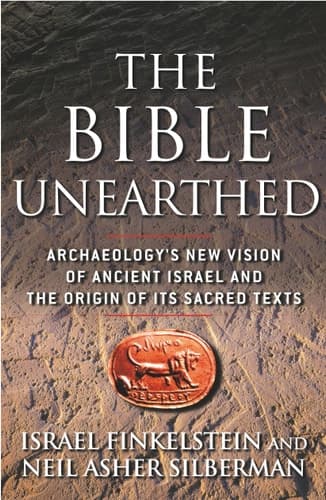
The Bible Unearthed Archaeology's New Vision of Ancient Israel
by Israel Finkelstein
You've just finished a book that traces how scholarship reconstructs biblical texts through historical methods—this one takes that detective work into the field. Finkelstein and Silberman show how archaeological evidence either confirms or upends what scholars thought they knew about Isaiah's world, the Babylonian exile, and what 'Israel' actually meant in the sixth century. It's the material evidence backing up the kind of critical analysis Gazzaniga was discussing.
View book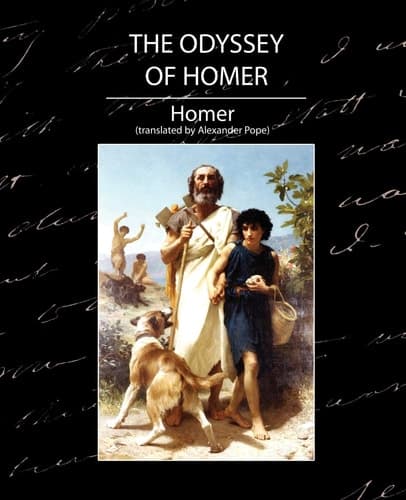
The Odyssey of Homer
by Translated By Alexander Pope Homer
Here's the surprise pick: Wilson's 2017 translation makes the parallels to Second Isaiah's 'new Exodus' narrative suddenly vivid. The Odyssey is fundamentally about a displaced people's journey home and the question of what makes you 'yourself' when you're far from your land—exactly the existential problem Second Isaiah was solving for the Babylonian exiles. Reading it alongside Gazzaniga's analysis of how Isaiah reframed national identity through action and journey gives you two ancient texts wrestling with the same human problem across different cultures.
View book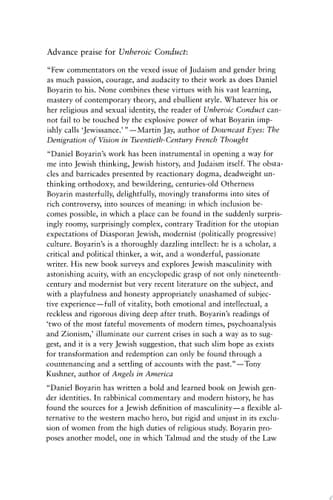
Unheroic Conduct The Rise of Heterosexuality and the Invention of the Jewish Man
by Daniel Boyarin
Sand does for Jewish identity what Gazzaniga shows Second Isaiah doing—he deconstructs how a people's sense of itself was constructed and reconstructed across centuries. Where Gazzaniga focuses on one prophet's rhetorical solution to exile, Sand traces how that solution (and others) actually shaped Jewish consciousness over millennia. It's more provocative and contested than Gazzaniga, but it's asking the same fundamental question: how does a scattered community become a coherent 'people'?
View book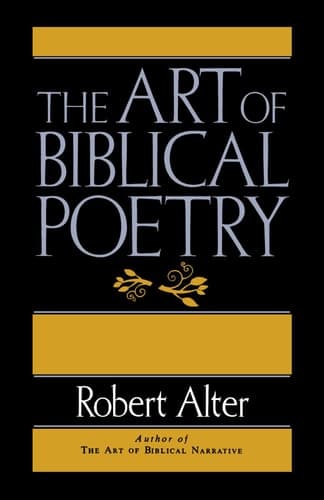
The Art of Biblical Poetry
by Robert Alter
Gazzaniga argues Second Isaiah should be read as substantial speeches, not fragmented poetry—Alter is the scholar who revolutionized how we actually *read* biblical texts as literary compositions. His close readings of narrative technique, repetition, and rhetorical structure will deepen your appreciation for how Isaiah 40-55 works as persuasive oratory. This is the practical companion to the theoretical framework you just encountered.
View bookAbout Michael S. Gazzaniga
Biography coming soon.
View author page