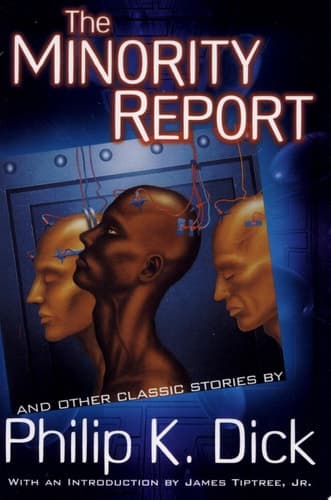
The Minority Report And Other Classic Stories
Philip K. DickPublished2002
Pages380
Formatpaperback
PublisherCitadel Press
Synopsis
Many thousands of readers worldwide consider Philip K. Dick to have been the greatest science fiction writer on any planet. Since his untimely death in 1982, interest in Dick's work has continued to mount and his reputation has been enhanced by a growing body of critical attention. The Philip K. Dick Award is now presented annually to a distinguished work of science fiction, and the Philip K. Dick Society is devoted to the study and promulgation of his works.
This collection includes all of the writer's earliest short and medium-length fiction (including several previously unpublished stories) covering the years 1954 - 1964, and featuring such fascinating tales as The Minority Report (the inspiration for Steven Spielberg's film), Service Call, Stand By, The Days of Perky Pat, and many others. Here, readers will find Dick's initial explorations of the themes he so brilliantly brought to life in his later work.
Dick won the prestigious Hugo Award for best novel of 1963 for The Man in the High Castle and in the last year of his life, the now-classic film Blade Runner was made from his novel Do Androids Dream of Electric Sheep?
The classic stories of Philip K. Dick offer an intriguing glimpse into the early imagination of one of science fiction's most enduring and respected names.
Recommendations
Generating recommendations…
Our AI is preparing recommendations for The Minority Report And Other Classic Stories. This usually takes under a minute.
About Philip K. Dick
P
Philip K. Dick
1928–1982
Philip Kindred Dick was an American novelist, short story writer, and essayist whose published work during his lifetime was almost entirely in the science fiction genre. Dick explored sociological, political and metaphysical themes in novels dominated by monopolistic corporations, authoritarian governments, and altered states. In his later works, Dick's thematic focus strongly reflected his personal interest in metaphysics and theology. He often drew upon his own life experiences and addressed the nature of drug abuse, paranoia and schizophrenia, and transcendental experiences in novels such as A Scanner Darkly and VALIS. Source and more information: [Wikipedia (EN)](http://en.wikipedia.org/wiki/Philip_K._Dick)
View author page