Synopsis
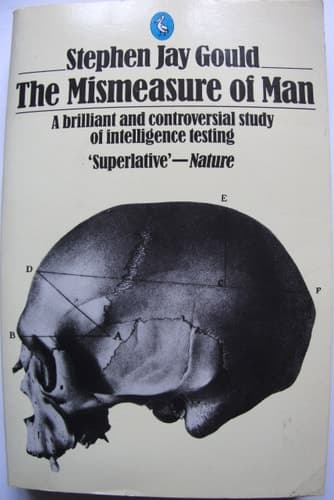
Product Description When published in 1981, The Mismeasure of Man was immediately hailed as a masterwork, the ringing answer to those who would classify people, rank them according to their supposed genetic gifts and limits. Yet the idea of of biology as destiny dies hard, as witness the attention devoted to The Bell Curve, whose arguments are here so effectively anticipated and thoroughly undermined. In this edition, Stephen Jay Gould has written a substantial new introduction telling how and why he wrote the book and tracing the subsequent history of the controversy on innateness right through The Bell Curve. Further, he has added five essays on questions of The Bell Curve in particular and on race, racism, and biological determinism in general. These additions strengthen the book's claim to be, as Leo J. Kamin of Princeton University has said, "a major contribution toward deflating pseudo-biological 'explanations' of our present social woes." Review "A rare book---at once of great importance and wonderful to read." ---Saturday Review From the Publisher 10 1.5-hour cassettes About the Author Stephen Jay Gould (1941-2002) was the Alexander Agassiz Professor of Zoology and Professor of Geology at Harvard University and the author of over twenty books.Arthur Morey has recorded over two hundred audiobooks in history, fiction, science, business, and religion, earning a number of AudioFile Earphones Awards and two Audie Award nominations. His plays and songs have been produced in New York, Chicago, and Milan, where he has also performed.
Recommendations
The Structure of Scientific Revolutions
by Thomas S. Kuhn
Kuhn does for the history of science what Gould does for the history of measurement—he dismantles the myth of objective, linear progress and shows how science is deeply shaped by the assumptions scientists bring to their work. You'll recognize the same intellectual rigor and the same willingness to challenge foundational beliefs, but applied to how paradigms shift rather than how they're misused.
View book
Simone de Beauvoir's the Second Sex
by George Myerson
Published in 1949, this is essential reading for understanding how biological determinism has been weaponized against women—it's the intellectual ancestor of Gould's entire project. De Beauvoir systematically dismantles the idea that anatomy is destiny, using philosophy, history, and cultural analysis in ways that will feel like a natural extension of the arguments you've just absorbed.
View book
Thinking Past Terror Islamism and Critical Theory on the Left
by Susan Buck-Morss
This is your surprise pick—it's cognitive psychology rather than history, but Kahneman spends considerable time documenting how our brains are wired to make exactly the kinds of statistical errors that Gould exposes in IQ testing and racial science. You'll see the psychological mechanisms behind the pseudoscience Gould critiques, which deepens your understanding of why these myths persist.
View book
The Demon-haunted World Science as a Candle in the Dark
by Carl Sagan
Sagan shares Gould's passion for defending rigorous science against pseudoscience, but he approaches it through the lens of wonder and skepticism rather than historical critique. Where Gould shows you how science went wrong, Sagan shows you how to think clearly about extraordinary claims—they're complementary tools for the same intellectual project.
View book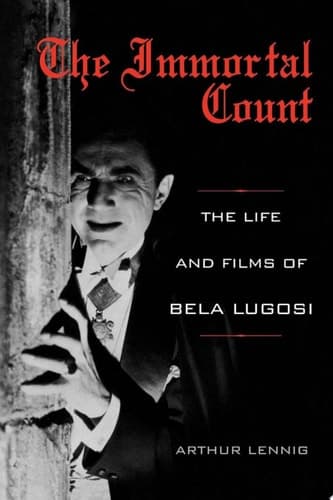
The Immortal Count The Life and Films of Bela Lugosi
by Arthur Lennig
This narrative nonfiction weaves together medical history, race, and ethics in a way that brings Gould's abstract arguments about biological determinism and racism into the lived reality of one woman and her family. Skloot writes with the accessibility of a journalist but the moral seriousness of a historian—it's a story that makes you feel the human cost of the scientific abuses Gould documents.
View bookAbout Stephen Jay Gould
Biography coming soon.
View author page