Synopsis
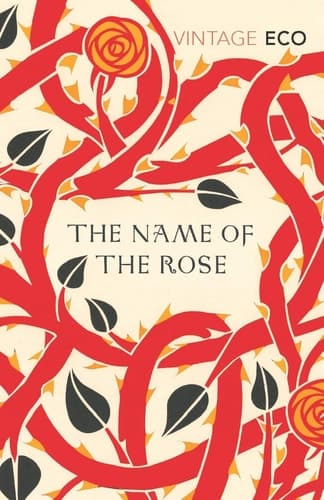
La novela emblemática de Umberto Eco.Una apasionante trama y admirable reconstrucción de una época especialmente conflictiva, la del siglo XVI.Valiéndose de las características propias de la novela gótica, la crónica medieval y la novela policíaca, El nombre de la rosa narra las actividades detectivescas de Guillermo de Baskerville para esclarecer los crímenes cometidos en una abadía benedictina en el año 1327. Le ayudará en su labor el novicio Adso, un hombre joven que se enfrenta por primera vez a las realidades de la vida, más allá de las puertas del convento.En esta primera y brillante incursión en el mundo de la narrativa, que Umberto Eco llevó a cabo hace ahora treinta años, el lector disfrutará de una trama apasionante y de una admirable reconstrucción de una época especialmente conflictiva de la historia de Occidente.Reseña:«Aquí hay misterios turbadores, personajes vívidos, un retrato logrado de una época fascinante, humor sutil, sucesos inesperados y una prosa ágil que puede adaptarse a los registros de la fe, la duda, el horror, el éxtasis amoroso y la desolación.»David LodgeENGLISH DESCRIPTIONUmberto Eco’s first novel, an international sensation and winner of the Premio Strega and the Prix Médicis Étranger awards.The year is 1327. Franciscans in a wealthy Italian abbey are suspected of heresy, and Brother William of Baskerville arrives to investigate. When his delicate mission is suddenly overshadowed by seven bizarre deaths, Brother William turns detective. His tools are the logic of Aristotle, the theology of Aquinas, the empirical insights of Roger Bacon - all sharpened to a glistening edge by wry humor and a ferocious curiosity. He collects evidence, deciphers secret symbols and coded manuscripts, and digs into the eerie labyrinth of the abbey, where "the most interesting things happen at night"."A brilliantly conceived adventure into another time, an intelligent and complex novel, a lively and well-plotted mystery."--SAN FRANCISCO CHRONICLE
Recommendations
Generating recommendations…
Our AI is preparing recommendations for El nombre de la rosa. This usually takes under a minute.
About Umberto Eco
U
Umberto Eco
1932–2016
Umberto Eco (5 January 1932 – 19 February 2016) was an Italian novelist, literary critic, philosopher, semiotician, and university professor. He is widely known for his 1980 novel Il nome della rosa (The Name of the Rose), a historical mystery combining semiotics in fiction with biblical analysis, medieval studies, and literary theory. He later wrote other novels, including Il pendolo di Foucault (Foucault's Pendulum) and L'isola del giorno prima (The Island of the Day Before). His novel Il cimitero di Praga (The Prague Cemetery), released in 2010, topped the bestseller charts in Italy. Eco also wrote academic texts, children's books, and essays, and edited and translated into Italian books from French, such as Raymond Queneau’s “Exercises in Style” (1983). He was the founder of the Department of Media Studies at the University of the Republic of San Marino,[3] president of the Graduate School for the Study of the Humanities at the University of Bologna, member of the Accademia dei Lincei, and an honorary fellow of Kellogg College, Oxford.
View author page