Synopsis
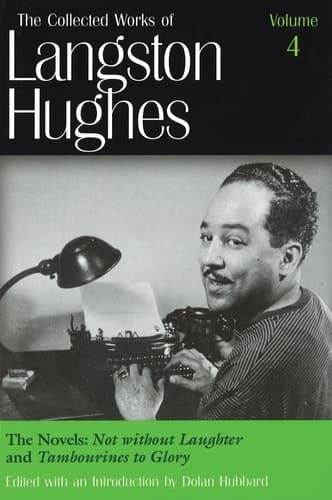
Although best known as a poet, Langston Hughes was also the author of two novels that richly evoke the black experience in America. First published in 1930 and 1958, respectively, Not without Laughter and Tambourines to Glory reflect the early and late vision of one of the twentieth century's most distinguished men of letters. In his introduction to this combined edition of both novels, Dolan Hubbard addresses Hughes's growing influence on American letters and reveals how a black aesthetic tradition shaped his art and his imagination.
Hughes shows us how the discourse of black America informs and alters our understanding of cultural history and of aesthetic values. In Not without Laughter, he movingly tells the story of a black boy growing into manhood in a small Kansas town during the early twentieth century and his experiences with race, family, school, work, music, and religion. His grandmother, a humble religious woman, struggles to keep her family (living with her are two of her three daughters, one son-in-law, and her grandson) together, on the meager income she earns by taking in washing.
Set in Harlem, the center of Hughes's spiritual universe, Tambourines to Glory is an urban folk melodrama based on the black fusion of Christian hymns and spirituals with the blues. This comic novel captures the spirit of newly transplanted southern blacks who bend the alien rhythms of the city to the gospel sound.
This volume of The Collected Works of Langston Hughes is a testament to a man whose life and writings have had a profound influence on world literature and is proof that Hughes's immense talent embraced not only poetry, but fiction as well.
Recommendations
Generating recommendations…
Our AI is preparing recommendations for The Novels: Not Without Laughter and Tambourines to Glory (Collected Works of Langston Hughes, Vol 4). This usually takes under a minute.
About Langston Hughes
L
Langston Hughes
1902–1967
Langston Hughes (1902-1967) Writer, editor, lecturer Langston Hughes achieved fame as a poet during the burgeoning of the arts known as the Harlem Renaissance, but those who label him "a Harlem Renaissance poet" have restricted his fame to only one genre and decade. In addition to his work as a poet, Hughes was a novelist, columnist, playwright, and essayist, and though he is most closely associated with Harlem, his world travels influenced his writing in a profound way. Langston Hughes followed the example of Paul Laurence Dunbar, one of his early poetic influences, to become the second African American to earn a living as a writer. His long and distinguished career produced volumes of diverse genres and inspired the work of countless other African American writers. --From Gale Cengage Learning Free resources
View author page