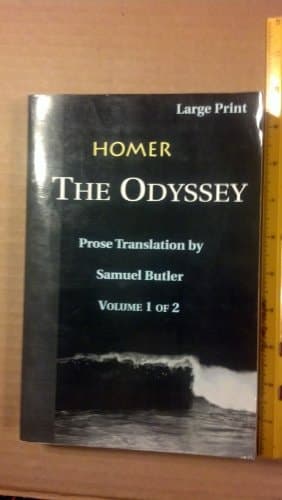
Synopsis
A substantial introduction covers many of the questions that lie behind the poem, including a thorough summary of Homeric grammar; the text is elucidated with full annotations, indexes and bibliography.
Recommendations

Texian Iliad A Military History of the Texas Revolution, 1835-1836
by Stephen L. Hardin
If you were captivated by the epic scale and sweeping mythological scope of The Odyssey, Homer's other masterpiece The Iliad will transport you even further into the world of ancient Greek heroes and gods. The Iliad's focus on the Trojan War provides a gripping companion piece, allowing you to delve deeper into this legendary conflict.
View book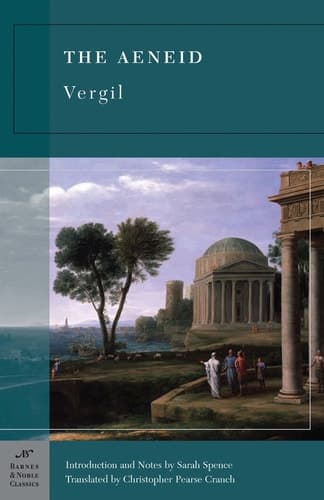
The Aeneid
by Virgil
Virgil's The Aeneid is another classic of ancient epic poetry that shares many similarities with The Odyssey. Like Odysseus, the protagonist Aeneas embarks on an epic journey filled with mythological encounters, divine interventions, and profound questions of duty, fate, and the human condition. The Aeneid's sweeping narrative and rich cultural references will appeal to fans of Homer's work.
View book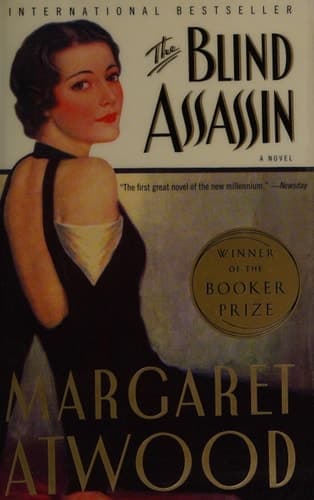
The Blind Assassin A Novel
by Margaret Atwood
For a fresh perspective on the Odyssey story, pick up Margaret Atwood's The Penelopiad. Atwood retells the classic tale from the point of view of Penelope, Odysseus' wife, providing a feminist counterpoint to the male-dominated original. Atwood's lyrical prose and keen insight into the human experience make this a captivating companion piece that will resonate with fans of Homer's epic.
View book
The Secret City: Woodlawn Cemetery and the Buried History of New York
by Fred Goodman
If you're looking to explore a more modern take on mythic storytelling, Kazuo Ishiguro's The Buried Giant is a compelling choice. Set in a mystical, post-Arthurian Britain, the novel blends elements of fantasy, history, and philosophy as it follows an elderly couple on a journey to uncover the truth about their past. Ishiguro's lyrical, meditative style will appeal to readers who appreciated the depth and complexity of The Odyssey.
View book
Tantra: The Way of Action A Practical Guide to Its Teachings and Techniques
by Francis King
For readers seeking another epic fantasy saga to immerse themselves in, Brandon Sanderson's The Way of Kings is an excellent recommendation. Like The Odyssey, this novel features a sprawling, intricate world filled with complex characters, mythological elements, and high-stakes adventures. Sanderson's masterful worldbuilding and compelling narrative will appeal to fans of Homer's sweeping storytelling and exploration of the human condition.
View bookAbout Homer
Ο Όμηρος είναι ο δημιουργός των ποιητικών έργων της Ιλιάδας και της Οδύσσειας, από τα πρώτα κείμενα της Ιστορικής περιόδου της αρχαίας Ελλάδας, γνωστών ως «Ομηρικά Έπη». Η Ιλιάδα αποτελείται από 15.693 στίχους και αναφέρεται στις τελευταίες πενήντα μία, αποφασιστικής σημασίας ημέρες του πολέμου της Τροίας, ο οποίος συνολικά διήρκεσε, σύμφωνα με τον μύθο, 10 χρόνια. Η Οδύσσεια αποτελείται από 12.110 στίχους και περιγράφει τον δεκαετή αγώνα του Οδυσσέα για τον νόστο (επιστροφή στην πατρίδα του Ιθάκη μετά την κατάληψη της Τροίας). Η γλώσσα των κειμένων είναι η ομηρική ελληνική, μια λογοτεχνική γλώσσα με ανάμειξη χαρακτηριστικών από την ιωνική και την αιολική διάλεκτο με κύρια επιρροή την ανατολική ιωνική διάλεκτο. Πολλοί ερευνητές πιστεύουν ότι αρχικά τα ποιήματα μεταδόθηκαν προφορικά. ---------- Homer (Ancient Greek: Ὅμηρος) was an ancient Greek author and epic poet. He is the reputed author of the Iliad and the Odyssey, the two epic poems that are the foundational works of ancient Greek literature. He is regarded as one of the greatest and most influential authors of all time. The Homeric epics were the greatest influence on ancient Greek culture and education. From antiquity until the present day, the influence of Homeric epic on Western civilization has been great, inspiring many of its most famous works of literature, music, art and film. The poems are in Homeric Greek, also known as Epic Greek, a literary language which shows a mixture of features of the Ionic and Aeolic dialects from different centuries; the predominant influence is Eastern Ionic. Most researchers believe that the poems were originally transmitted orally. The ancient Greeks generally believed that Homer was an historical individual, but modern scholars are skeptical: no reliable biographical information has been handed down from classical antiquity, and the poems themselves manifestly represent the culmination of many centuries of oral story-telling and a well-developed "formulaic" system of poetic composition. According to Martin West, "Homer" is "not the name of a historical poet, but a fictitious or constructed name."
View author page