Synopsis
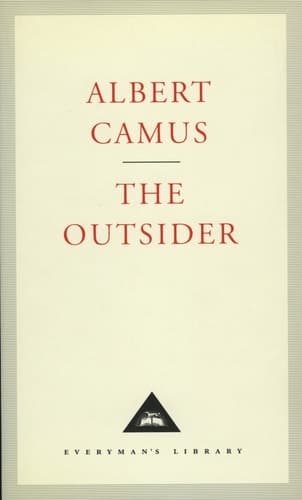
Albert Camus' laconic masterpiece about a Frenchman who murders an Arab in colonial Algeria is famous in its time for diagnosing a state of alienation and spiritual exhaustion which summed up the mood of the mid-twentieth century. Today, more than fifty years after its first appearance, we can see that this early success was no passing fashion: The Outsider continues to speak to us of ultimate things with the force of a parable and the excitement of a thriller and remains one of the most widely read and influential classics of the century.
Recommendations
Generating recommendations…
Our AI is preparing recommendations for The Outsider. This usually takes under a minute.
About Albert Camus

Albert Camus
1913–1960
Albert Camus was a French Algerian author, philosopher, and journalist who was awarded the Nobel Prize for Literature in 1957. He was a key philosopher of the 20th-century and his most famous work is the novel *L'Étranger* (*The Stranger*). In 1949, Camus founded the Group for International Liaisons within the Revolutionary Union Movement, which was a group opposed to some tendencies of the surrealistic movement of André Breton. Camus was the second-youngest recipient of the Nobel Prize for Literature - after Rudyard Kipling - when he became the first African-born writer to receive the award. He is the shortest-lived of any literature laureate to date, having died in an automobile accident just over two years after receiving the award. He is often cited as a proponent of existentialism, the philosophy that he was associated with during his own lifetime, but Camus himself rejected this particular label. In an interview in 1945, Camus rejected any ideological associations: "No, I am not an existentialist. Sartre and I are always surprised to see our names linked…"
View author page