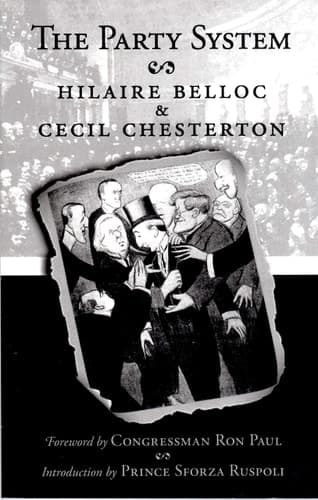
Synopsis
Pertinent to America, Britain, and other Western democracies, this book explains that what people believe happens in national assemblies and parliaments is radically different from the reality. Instead of being places where debate is intense, passionate, and aimed at the national interest, the fact is most members of these institutions act on behalf of powerful, unelected interests. They know, implicitly, who really runs the country—and their only real task is to decide if they want to try and rock the boat (thereby risking their salary, their reputation, their future), or stay silent for fear or favor. The book demonstrates beyond any doubt that the very nature of the system is hostile to democracy as laypeople understand it.
Recommendations

Jack London 2 - The Iron Heel and Other Stories
by Jack London
London's 1908 dystopia presents the same thesis as Belloc but through narrative rather than polemic—showing us an oligarchic future where democratic institutions become pure theater masking absolute corporate control. Where Belloc diagnoses the disease, London shows you what happens when the patient stops pretending to recover, making his century-old warning feel uncomfortably prescient about power's true mechanics.
View book
Seeing Like a State How Certain Schemes to Improve the Human Condition Have Failed
by James C. Scott
Scott takes Belloc's insight about the gap between theory and practice and expands it into a framework for understanding why centralized systems consistently fail—he examines how governments and institutions systematize reality in ways that destroy local knowledge and actual human flourishing. It's the intellectual architecture underlying Belloc's observations, complete with case studies that feel like watching the Party System's mechanisms at work across history.
View book
The Last Leopard: A Life of Giuseppe Tomasi di Lampedusa
by David Gilmour
Here's your surprise: a lush, sensory novel about Sicilian aristocracy during political upheaval that captures something Belloc only argues—the lived experience of watching power structures rearrange themselves while ordinary people convince themselves everything's changed. The famous line 'everything must change so that everything can stay the same' is Belloc's thesis rendered as human tragedy and dark comedy, filtered through a protagonist who understands the game too well.
View book
The Fountain Pen Conspiracy
by Jonathan Kwitny
Wells, writing in 1928, shares Belloc's skepticism about democratic institutions but proposes a different diagnosis—that the real problem is the public's inability to think clearly about governance at scale. Where Belloc emphasizes hidden interests, Wells emphasizes hidden incompetence, and together they create a fuller picture of why your representatives seem to operate in a different reality than you inhabit.
View book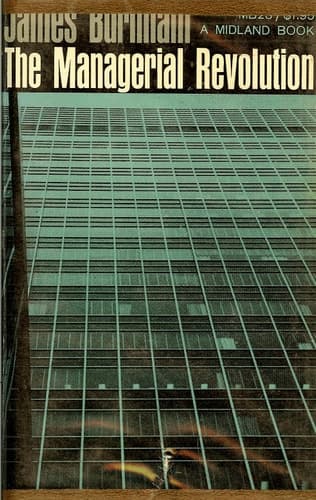
The Managerial Revolution What is Happening in the World
by James Burnham
Burnham takes Belloc's observation about unelected interests and traces exactly who they are—a new managerial class that controls institutions regardless of which party holds office. Published in 1941, it reads like someone took Belloc's diagnosis and added the names and mechanisms, showing you precisely how the Party System perpetuates itself through bureaucratic rather than electoral means.
View bookAbout Hilaire Belloc
H
Hilaire Belloc
1870–1953
Joseph Hilaire Pierre René Belloc was born in La Celle-Saint-Cloud, France, the son of a French father, who was an attorney, and an English mother, who was an author. In 1872, his father died in 1872, leaving the family destitute, and his mother moved with Belloc to Slindon, West Sussex, where he spent most of his childhood. He was educated at John Henry Newman's Oratory School in Edgbaston, Birmingham, and then volunteered to serve in the French Army. He was posted in an artillery regiment near Toul in 1891. After his release from the military, he studied history at Oxford University, graduating in 1895. In 1896, he married Elodie Hogan, an American, and published his first book, a book of poetry called Verses and Sonnets. In 1906 he and his family moved to Shipley, West Sussex, where he lived until just before he died. He went into politics, and was a Liberal Party Member of Parliament for Salford South from 1906-1910. In 1914, the year his wife Elodie died of influenza, he took a position as edited of the war journal Land and Water, where he stayed until 1920. In 1918, his son Louis was killed while serving in the Royal Flying Corps in France. Belloc suffered a stroke in 1941, from which he never recovered.
View author page