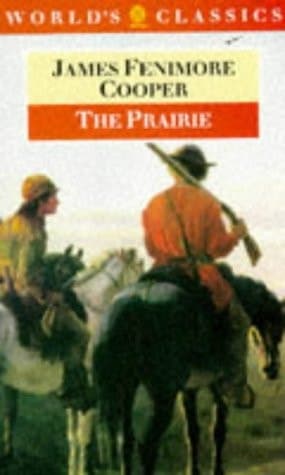
The Prairie
James Fenimore CooperPublished1992
Pages393
Formatpaperback
PublisherOxford University Press
Synopsis
Set in the immense landscape of the Great Plains, The Prairie (1827) addresses many questions raised by the penetration of the American west: the displacement of the Indians, the destruction of nature, and the creation of a just society both ordered and free. Natty Bumppo, a man now in the autumn of his days, is the spokesman for the conservation of the natural environment. But as his physical prowess wanes he is ultimately unable to thwart the despoilers. In this, the last in the series of five Leatherstocking Tales, Cooper resolves the issues of The Pioneers and The Last of the Mohicans, but at the same time eloquently suggests that humility, self-control, reverence for God, and respect for nature are tragically lost on the prairie.
Recommendations
Generating recommendations…
Our AI is preparing recommendations for The Prairie. This usually takes under a minute.
About James Fenimore Cooper
J
James Fenimore Cooper
1789–1851
James Fenimore Cooper was a prolific and popular American writer of the early 19th century. He is best remembered as a novelist who wrote numerous sea-stories and the historical novels known as the Leatherstocking Tales, featuring frontiersman Natty Bumppo. Among his most famous works is the Romantic novel [*The Last of the Mohicans*][1], often regarded as his masterpiece. ([Source][2]) [1]: http://openlibrary.org/works/OL77958W/The_last_of_the_Mohicans [2]: http://en.wikipedia.org/wiki/James_Fenimore_Cooper
View author page