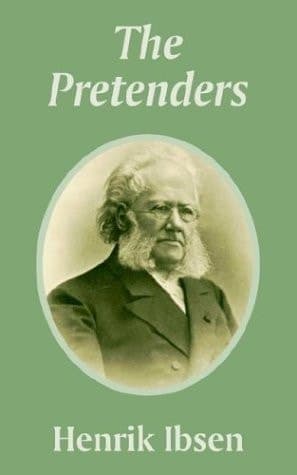
The Pretenders
Henrik IbsenPublished2003
Pages132
Formatpaperback
PublisherUniversity Press of the Pacific
Synopsis
Henrik Ibsen was a Norwegian poet and dramatist; was born at Skien, a small village on Langesund Fjord, Norway, March 20, 1828. While in his twentieth year he became an apothecary's clerk in the village of Grimstad, during which period he wrote several poems which were published in country papers, and of which but one, Til Ungarn, survives. While preparing for Christiania University, he wrote a drama entitled Catalina, which was rejected by the theatres and publishers, and was printed at last at the expense of a friend, the total sales being but thirty copies. The same year he entered Christiania University and began writing for the daily and other periodicals, and he closed the year by obtaining the presentation of a one-act play, Kjaempehojen, at the Christiania Theatre.His Christiania career was cut short by the offer of the post of theatre director and dramatic author for the theatre at Bergen, the second city of Norway, with a trip abroad to study methods and an engagement for five years. No doubt the poet's remarkable dramatic handling is largely due to his having accepted this proposal and thus having long studied the drama from the standpoint of the actual presentation.His plays are: Brand, a Drama; A Doll's House, a satiric comedy; Peer Gynt, a dramatic poem; Emperor and Galilean, a historic drama (in two parts, I. Julian's Apostasy, II. Julian, the Emperor); The Pillars of Society, a satiric comedy; The Warriors at Helgeland, a historical drama, Love's Comedy. a satiric play: and the series comprising Ghosts, An Enemy of the People, The Wild Duck, Rosmersholm, The Lady from the Sea, Hedda Gabler, and Architect Solness, all of which are alike in that they aim to dissect the conventionalities of the social system under which we live.
Recommendations
An Enemy of the People ; The Wild Duck ; Rosmersholm
by Henrik Ibsen
Wait—I know what you're thinking. But hear me out: if you found *The Pretenders* compelling, Ibsen's *Rosmersholm* takes his dissection of social hypocrisy even further, focusing on how ideology and personal desire collide within the confines of a single household. The psychological intensity here is almost suffocating—characters trapped by their own principles in ways that feel painfully modern.
View book
The Apocalyptic Vision of Mikhail Bulgakov's the Master and Margarita (Studies in Slavic Language & Literature)
by Edward E. Ericson
Bulgakov shares Ibsen's gift for using theatrical structure to expose the absurdity of institutional power, but he does it with surrealism and dark comedy instead of drawing-room drama. The novel's parallel narratives—one set in Soviet Moscow, one in ancient Jerusalem—create the same effect of holding a mirror up to society's pretenses, except the mirror is deliberately warped and hilarious.
View book
Ralph Ellison - Invisible Man
by Anke Balduf
Ellison does what Ibsen does—examines how society forces people into false roles—but through the lens of racial identity and systemic exclusion. The protagonist's journey through various "pretenses" (literal and metaphorical) that others demand he perform echoes the identity crises in *The Pretenders*, though Ellison adds a modernist, almost hallucinatory quality to the social dissection.
View book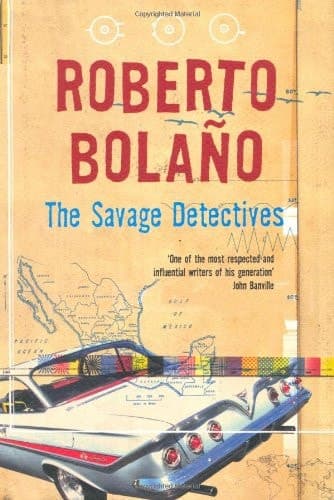
The Savage Detectives A Novel
by Roberto Bolaño
This is your "surprise" pick: a sprawling, fragmented novel that feels nothing like Ibsen on the surface, yet it's fundamentally about the gap between artistic pretense and lived reality. Bolaño's young poets chasing meaning through Mexico City mirror the spiritual and intellectual searching in *The Pretenders*, but filtered through late-20th-century disillusionment and formal experimentation.
View book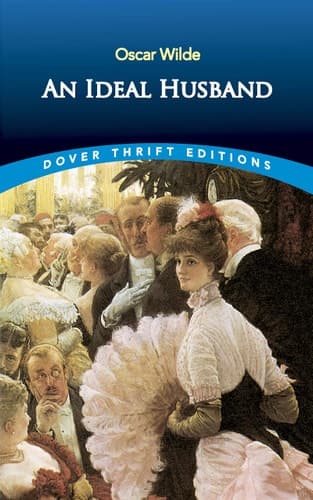
An Ideal Husband
by Oscar Wilde
Wilde was writing at the tail end of the Victorian era when Ibsen's plays were causing scandals across Europe, and you can feel the influence—but Wilde weaponizes wit where Ibsen uses psychological precision. Both playwrights expose how respectability is a performance, how secrets corrode relationships, and how society's moral standards are arbitrary. Wilde's version is simply more fun, with epigrams that cut like scalpels.
View bookAbout Henrik Ibsen
H
Henrik Ibsen
1828–1906
Henrik Ibsen was a major 19th-century Norwegian playwright, theatre director, and poet. He is often referred to as "the god father" of modern drama and is one of the founders of Modernism in the theatre.[1] His plays were considered scandalous to many of his era, when Victorian values of family life and propriety largely held sway in Europe. Ibsen's work examined the realities that lay behind many facades, possessing a revelatory nature that was disquieting to many contemporaries. It utilized a critical eye and free inquiry into the conditions of life and issues of morality. Ibsen is often ranked as one of the truly great playwrights in the European tradition, alongside Shakespeare. <cite>— [Wikipedia](https://en.wikipedia.org/wiki/Henrik_Ibsen)</cite>
View author page