Synopsis
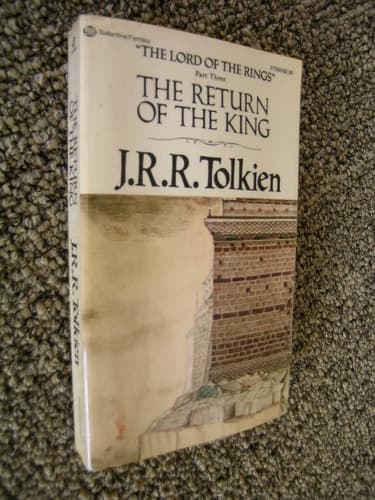
As the Shadow of Mordor grows across the land, Aragorn is revealed as the hidden heir of the ancient kings. Gandalf miraculously returns and defeats the evil wizard, Saruman. Sam leaves his master for dead after a battle with the giant spider, Shelob; but Frodo is still alive -- in the hands of the Orcs. And all the while the armies of the Dark Lord are massing -- and the One Ring comes ever closer to the Cracks of Doom.
Recommendations
Generating recommendations…
Our AI is preparing recommendations for The Return of the King. This usually takes under a minute.
About J.R.R. Tolkien
J
J.R.R. Tolkien
1892–1973
John Ronald Reuel Tolkien (1892-1973) was a major scholar of the English language, specialising in Old and Middle English. Twice Professor of Anglo-Saxon (Old English) at the University of Oxford, he also wrote a number of stories, including most famously The Hobbit (1937) and The Lord of the Rings (1954-1955), which are set in a pre-historic era in an invented version of the world which he called by the Middle English name of Middle-earth. This was peopled by Men (and women), Elves, Dwarves, Trolls, Orcs (or Goblins) and of course Hobbits. He has regularly been condemned by the Eng. Lit. establishment, with honourable exceptions, but loved by literally millions of readers worldwide. In the 1960s he was taken up by many members of the nascent "counter-culture" largely because of his concern with environmental issues. In 1997 he came top of three British polls, organised respectively by Channel 4 / Waterstone's, the Folio Society, and SFX, the UK's leading science fiction media magazine, amongst discerning readers asked to vote for the greatest book of the 20th century. ([Source][1]) [1]: http://www.tolkiensociety.org/tolkien/biography.html
View author page