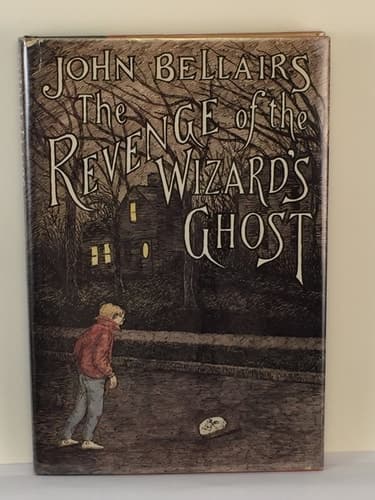
The Revenge of the Wizard's Ghost
John BellairsPublished1985
Pages147
Formathardcover
PublisherDial Books for Young Readers
Synopsis
Collapsed in a weird trance, Johnny Dixon is dying. Professor Childermass soon learns why--Johnny is possessed by the spirit of the late Warren Windrow. In a desperate effort to find a clue that will save Johnny's life, the Professor races to the gloomy Windrow estate where he finds himself fighting for his own life.
Recommendations
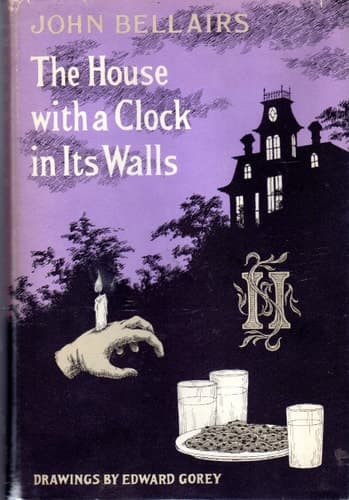
The House with a Clock in Its Walls
by John Bellairs
Like Bellairs, Castleman builds dread through architectural detail—a house becomes a character itself, full of hidden mechanisms and malevolent secrets. Both stories hinge on a young protagonist uncovering supernatural danger tied to a previous owner's unfinished business, with an older mentor figure racing against time to prevent catastrophe.
View book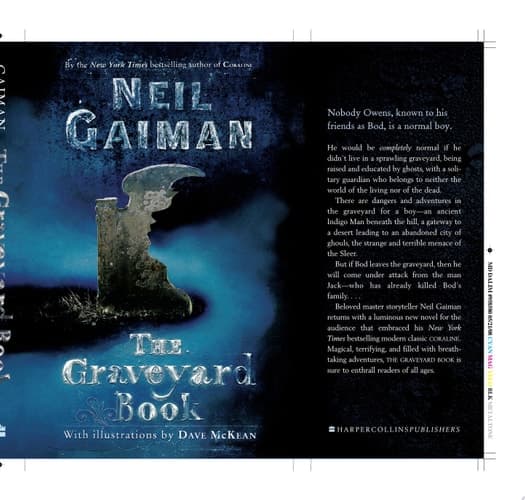
The Graveyard Book
by Neil Gaiman
Gaiman captures that same balance Bellairs perfected—genuinely eerie moments that never tip into pure horror, allowing younger readers to experience real chills. The protagonist navigates between worlds (living and dead) much like Johnny Dixon finds himself caught between his own consciousness and Warren Windrow's haunting presence.
View book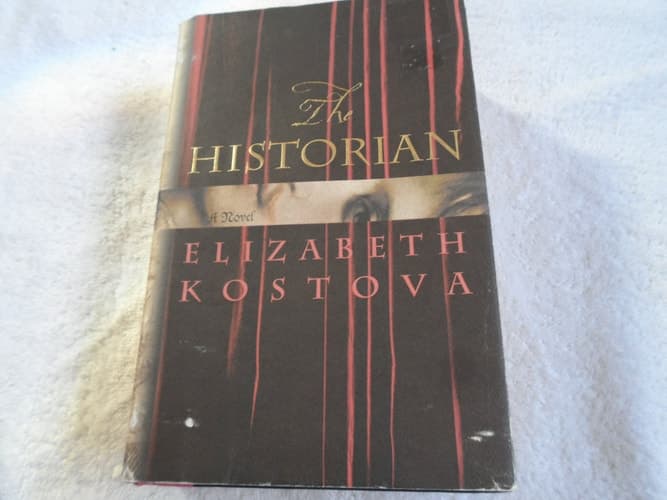
The Historian
by Elizabeth Kostova
This is a departure in scope—Kostova writes for adults—but the core appeal is identical: a mystery that unfolds through investigation of old estates, dusty archives, and the lingering supernatural consequences of historical figures. The narrative structure mirrors Bellairs' technique of revelation through discovery, though stretched across decades and continents.
View book
The Phantom Tollbooth
by Norton Juster
A curveball, but hear me out: Juster shares Bellairs' gift for making the mundane world suddenly contain hidden dimensions and rules. Where Bellairs uses genuine menace, Juster uses wordplay and logic puzzles, but both authors write as if the world has secret layers that only certain people can perceive—and both protagonists must navigate those layers to survive.
View book
The James Jones Reader: Outstanding Selections from His War Writings, Including from Here to Eternity,the Thin Red Line, and Whistle
by James Jones
McPherson's novella operates in that rare space where the supernatural feels plausible because it emerges from character and place rather than plot mechanics. Like Bellairs, he trusts readers to feel unease through suggestion—a mysterious object, a character's inexplicable behavior, the weight of history pressing on the present—without spelling everything out.
View bookAbout John Bellairs
J
John Bellairs
1938–1991
<b><a href="http://bellairsia.com">John Bellairs</a></b> (1938–1991) was an American novelist working primarily in the Gothic genre. He is best-known for the children's classic <i>The House with a Clock in its Walls</i> 1973) and for the pathbreaking fantasy novel <i>The Face in the Frost</i> (1969). Bellairs held a bachelor's degree from Notre Dame University and a master's in English from the University of Chicago. He combined writing and teaching from 1963 to 1971, including a year at <a href="http://shimer.edu">Shimer College</a> that coincided with that school's storied <a href="http://www.bellairsia.com/the_life/il/gis.html">Grotesque Internecine Struggle</a>. After 1971, he took up writing as his full-time work. (from <a href="http://shimercollege.wikia.com/John_Bellairs">Shimer College Wiki</a>)
View author page