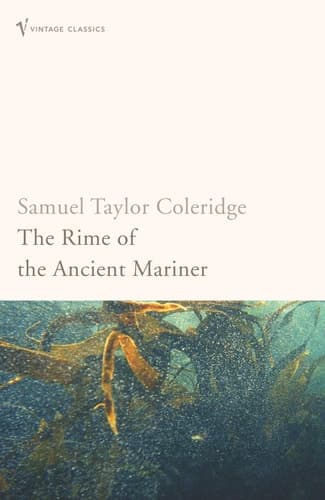
The Rime of the Ancient Mariner
Samuel Taylor ColeridgePublished2004
Pages32
Formatpaperback
PublisherVintage
Synopsis
Coleridge's celebrated poem was written at the suggestion of William Wordsworth in the early days of their friendship, and published for the first time in 1798. It is the story of a nightmare voyage to the South Pole told by the sole survivor, the bright-eyed ancient mariner whose wanton killing of an albatross, a bird of good omen, brought misfortune on the ship and all its crew. Coleridge's own commentary on the fateful drama, written some years later at a time of renewed religious feeling, is printed alongside the poem. The poem is brilliantly illustrated with a sequence of specially commissioned drawings by Mervyn Peake. His powerful, arresting images perfectly express the qualities of the text, its gothic atmosphere and supernatural terrors, ultimately softened by pity and the hope of redemption.
Recommendations
Generating recommendations…
Our AI is preparing recommendations for The Rime of the Ancient Mariner. This usually takes under a minute.
About Samuel Taylor Coleridge
S
Samuel Taylor Coleridge
1772–1834
Samuel Taylor Coleridge was an English poet, Romantic, literary critic and philosopher who, with his friend William Wordsworth, was one of the founders of the Romantic Movement in England and one of the Lake Poets. He is probably best known for his poems The Rime of the Ancient Mariner and Kubla Khan, as well as for his major prose work Biographia Literaria. His critical work, especially on Shakespeare, was highly influential, and he helped introduce German idealist philosophy to English-speaking culture. He coined many familiar words and phrases, including the celebrated suspension of disbelief. He was a major influence, via Emerson, on American transcendentalism. ([Source][1].) [1]:http://en.wikipedia.org/wiki/Samuel_Taylor_Coleridge
View author page