Synopsis
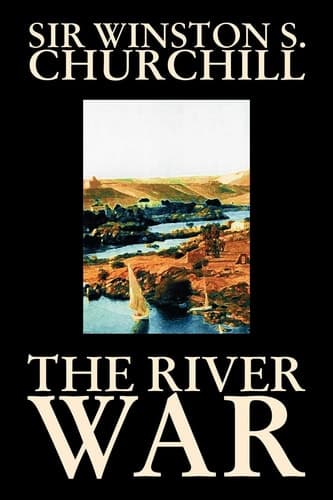
Here Sir Winston S. Churchill -- the same man who would go on to lead the free world through its darkest hours during the second world war -- tells the tale of the Anglo-Egyptian reconquest of the Sudan. It isn't just an account of the battles and the politics; it's the story of the destiny of the people of the region: Churchill with his powerful insight tells how the war changed the fates of England, Egypt, and the Arabian peoples in northeast Africa. In vivid style the book describes the background to the war, the relationship of the Upper Nile to Egypt, the murder of General Charles George Gordon in the siege at Khartoum, the political reaction in England, and Kitchener's elaborate preparations for the war. While in the Sudan, Churchill participated in the Battle of Omdurman. Churchill comments at length on the mechanisation of war with use of the telegraph, railroad, and a new generation of weaponry.
Recommendations
Generating recommendations…
Our AI is preparing recommendations for The River War by Winston S. Churchill, History. This usually takes under a minute.
About Winston S. Churchill
Winston S. Churchill
1874–1965
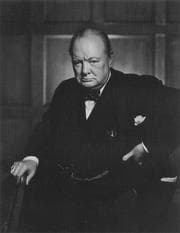
Sir Winston Leonard Spencer-Churchill, KG, OM, CH, TD, PC, FRS was a British politician known chiefly for his leadership of the United Kingdom during World War II. He is widely regarded as one of the great wartime leaders. He served as Prime Minister from 1940 to 1945 and again from 1951 to 1955. A noted statesman and orator, Churchill was also an officer in the British Army, a historian, writer and artist. To date, he is the only British Prime Minister to have received the Nobel Prize in Literature, and the first person to be recognised as an honorary citizen of the United States.
View author page