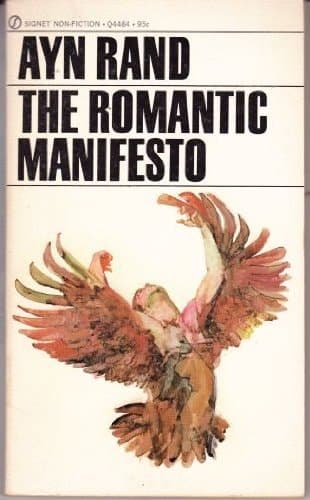
Synopsis
In her ethics Ayn Rand extolled the virtue of selfishness—and in her theory of art she was no less radical. Piercing the fog of mysticism and sentimentality that engulfs art, the essays in The Romantic Manifesto explain why, since time immemorial, man has created and consumed works of art.
Ayn Rand argues that objective standards in art are possible because art is not a subjective luxury, but rather a critical need of human life—not a material need, but a need of man’s rational mind, the faculty on which his material survival depends.
Ayn Rand explains the indispensable function of art in man’s life (ch. 1), the objective source of man’s deeply personal, emotional response to art (ch. 2), and how an artist’s fundamental, often unstated view of man and of the world shapes his creations (ch. 3).
Turning to her own field of artistic creation, Rand elaborates (ch. 5) on her distinctive theory of literature and identifies principles by which to judge an artwork objectively. “What is Romanticism?” (ch. 6) sheds new light on the nature and philosophy of the school of literature under which Rand classified her own work. Later essays explain how contemporary art reveals the debased intellectual state of our culture (ch. 7, 8 and 9).
In the final essay Rand articulates the goal of her own fiction writing as “the projection of an ideal man, as an end in itself”—and explains that she originated her philosophy as a means to this end.
Table of Contents
Introduction
The Psycho-Epistemology of Art
Philosophy and Sense of Life
Art and Sense of Life
Art and Cognition
Basic Principles of Literature
What Is Romanticism?
The Esthetic Vacuum of Our Age
Bootleg Romanticism
Art and Moral Treason
Introduction to Ninety-Three
The Goal of My Writing
The Simplest Thing in the World
Index
Recommendations
Generating recommendations…
Our AI is preparing recommendations for The Romantic Manifesto: A Philosophy of Literature. This usually takes under a minute.
About Ayn Rand
A
Ayn Rand
1905–1982
Alice O'Connor (born Alisa Zinovyevna Rosenbaum;[a] February 2, [O.S. January 20] 1905 – March 6, 1982), better known by her pen name Ayn Rand (/aɪn/), was a Russian-American writer and philosopher. She is known for her fiction and for developing a philosophical system she named Objectivism. Born and educated in Russia, she moved to the United States in 1926. She wrote a play that opened on Broadway in 1935. After two early novels that were initially unsuccessful, she achieved fame with her 1943 novel, The Fountainhead. In 1957, Rand published her best-known work, the novel Atlas Shrugged. Afterward, until her death in 1982, she turned to non-fiction to promote her philosophy, publishing her own periodicals and releasing several collections of essays. Rand advocated reason as the only means of acquiring knowledge; she rejected faith and religion. She supported rational and ethical egoism and rejected altruism. In politics, she condemned the initiation of force as immoral[5][6] and opposed collectivism, statism, and anarchism. Instead, she supported laissez-faire capitalism, which she defined as the system based on recognizing individual rights, including property rights. Although Rand opposed libertarianism, which she viewed as anarchism, she is often associated with the modern libertarian movement. In art, Rand promoted romantic realism. She was sharply critical of most philosophers and philosophical traditions known to her, except for Aristotle, Thomas Aquinas and classical liberals. Rand's fiction received mixed reviews from literary critics.[ Although academic interest in her ideas has grown since her death, academic philosophers have generally ignored or rejected her philosophy because of her polemical approach and lack of methodological rigor.[4] Her writings have influenced some libertarians and conservatives politically. The Objectivist movement attempts to spread her ideas, both to the public and in academic settings
View author page