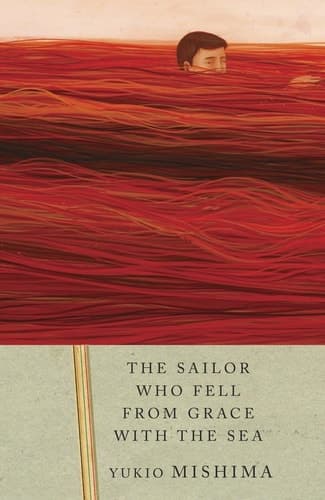
The Sailor Who Fell from Grace with the Sea
Yukio MishimaPublished1994
Pages192
Formatpaperback
PublisherVintage
Synopsis
A novel from "one of the outstanding writers of the world” (The New York Times) that explores the vicious nature of youth that is sometimes mistaken for innocence. • “A major work of art.” —Time
Thirteen-year-old Noboru is a member of a gang of highly philosophical teenage boys who reject the tenets of the adult world — to them, adult life is illusory, hypocritical, and sentimental. When Noboru’s widowed mother is romanced by Ryuji, a sailor, Noboru is thrilled. He idolizes this rugged man of the sea as a hero. But his admiration soon turns to hatred, as Ryuji forsakes life onboard the ship for marriage, rejecting everything Noboru holds sacred. Upset and appalled, he and his friends respond to this apparent betrayal with a terrible ferocity.
Recommendations
Generating recommendations…
Our AI is preparing recommendations for The Sailor Who Fell from Grace with the Sea. This usually takes under a minute.
About Yukio Mishima
Y
Yukio Mishima
1925–1970
Yukio Mishima (三島 由紀夫) was the pen name of Kimitake Hiraoka (平岡 公威), a Japanese author, poet and playwright, also remembered for his ritual suicide by seppuku. At age six, Mishima enrolled in elite Peers School (Gakushuin 学習院). At 12, Mishima began to write his first stories. He read voraciously the works of Oscar Wilde, Rainer Maria Rilke and numerous classic Japanese authors. After six years at school, he became the youngest member of the editorial board in its literary society. Mishima was attracted to the works of Tachihara Michizō, which in turn created an appreciation for the classical form of the waka. Mishima's first published works included waka poetry, before he turned his attention to prose. ([Source][1]) [1]: http://en.wikipedia.org/wiki/Yukio_Mishima
View author page