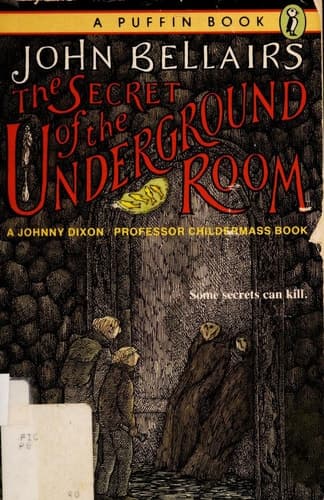
The Secret of the Underground Room
John BellairsPublished1992
Pages127
Formatpaperback
PublisherPuffin Books
Synopsis
Professor Childermass is stunned when Father Higgins claims that a ghost is trying to contact him. Then the priest disappears. When the professor and Johnny catch up to him, they make a terrifying discovery -- Father Higgins is possessed by Masterman, the spirit of a long-dead knight determined to rule the world. And it looks as if Masterman is going to get his way. "Has enough chills to satisfy readers not quite ready for Stephen King."-- "School Library Journal"
Recommendations
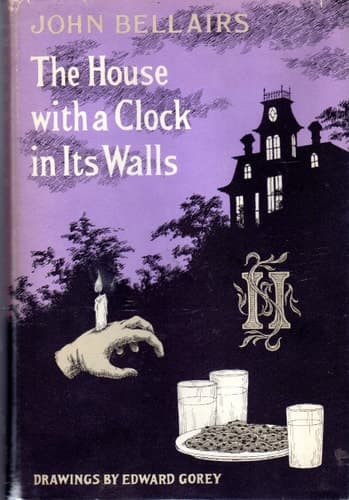
The House with a Clock in Its Walls
by John Bellairs
Like Bellairs, Frumkes builds genuine dread through the collision of the mundane and the supernatural—here, a boy discovers his uncle's house contains an actual magical clock counting down to apocalypse. The pacing mirrors what makes Bellairs effective: slow-burn mystery punctuated by moments of real danger, with a young protagonist who has to think his way through supernatural threats rather than overpower them.
View book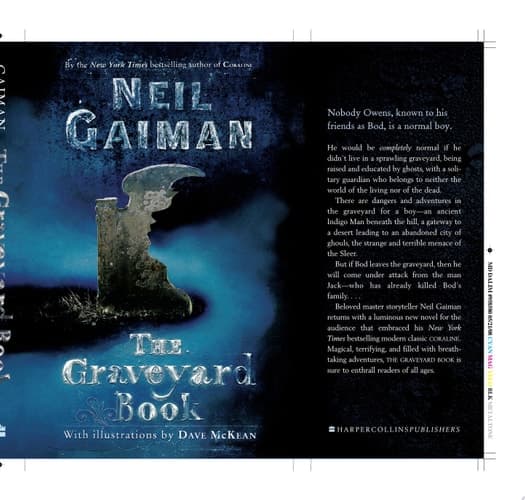
The Graveyard Book
by Neil Gaiman
Gaiman does what Bellairs does—makes the supernatural feel like it operates by its own internal logic—but he stretches it across a full childhood. A boy raised by ghosts in a graveyard faces a very real threat from the living world. You'll recognize that same balance of whimsy and genuine menace, where the stakes feel concrete even when dealing with the impossible.
View book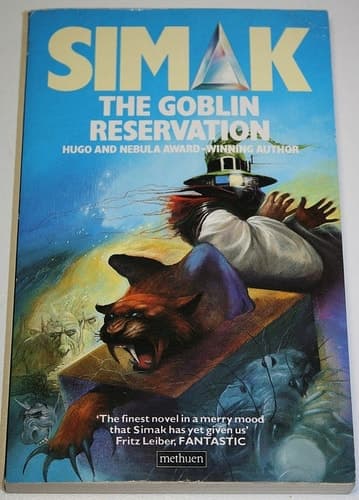
The Goblin Reservation
by Clifford D. Simak
Here's your genre curveball: it's science fiction, not fantasy, but it has that same wry, intellectual humor Bellairs brings to his supernatural mysteries. A man wakes up in a future where goblins, elves, and other creatures are real—preserved in a reservation—and he has to navigate a mystery involving them. The tone is lighter than Bellairs, but the puzzle-box plotting and the way it treats magical beings as real problems to solve will feel familiar.
View book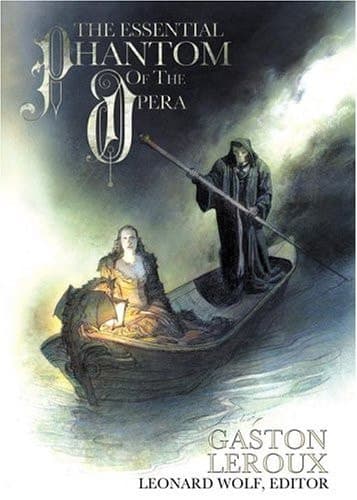
The Essential Phantom of the Opera
by Gaston Leroux
A century older than Bellairs, but Leroux pioneered exactly what Bellairs perfected: a mystery where the supernatural threat turns out to be rooted in human obsession and tragedy. The phantom's possession of the opera house works like Masterman's possession of Father Higgins—an invisible force reshaping reality. The gothic atmosphere and the slow revelation of what's actually happening will feel like coming home to the source material.
View book
Mary Wollstonecraft and the Feminist Imagination
by Barbara Taylor
Two young girls in Victorian London solve a mystery involving a ghost and uncover something far more sinister about the adults around them. Stratford captures that Bellairs quality of children taking the supernatural seriously while adults dismiss them, and the way the investigation pulls back layers to reveal something genuinely unsettling. It's got the same page-turning momentum and the satisfaction of a puzzle that actually holds together.
View bookAbout John Bellairs
J
John Bellairs
1938–1991
<b><a href="http://bellairsia.com">John Bellairs</a></b> (1938–1991) was an American novelist working primarily in the Gothic genre. He is best-known for the children's classic <i>The House with a Clock in its Walls</i> 1973) and for the pathbreaking fantasy novel <i>The Face in the Frost</i> (1969). Bellairs held a bachelor's degree from Notre Dame University and a master's in English from the University of Chicago. He combined writing and teaching from 1963 to 1971, including a year at <a href="http://shimer.edu">Shimer College</a> that coincided with that school's storied <a href="http://www.bellairsia.com/the_life/il/gis.html">Grotesque Internecine Struggle</a>. After 1971, he took up writing as his full-time work. (from <a href="http://shimercollege.wikia.com/John_Bellairs">Shimer College Wiki</a>)
View author page