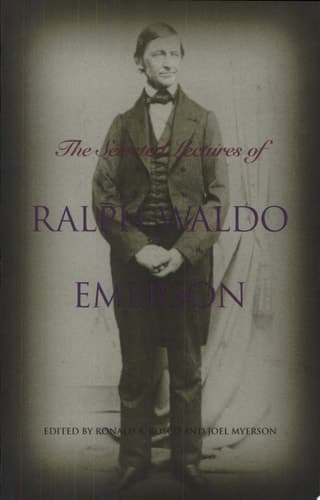
The Selected Lectures of Ralph Waldo Emerson
Ralph Waldo EmersonPublished2005
Pages379
Formatpaperback
PublisherUniversity of Georgia Press
Synopsis
This is the first and only comprehensive selection of lectures by Ralph Waldo Emerson, his era’s most prominent American man of letters and one of the foremost architects of our intellectual culture. Based on authoritative texts selected and edited by Ronald A. Bosco and Joel Myerson--the most experienced Emerson editors working today--these twenty-five addresses collectively exemplify the lecture style for which Emerson was famed in his day. Best known to his contemporaries as a lecturer, Emerson delivered some 1,500 addresses over the course of his career. Because his most important ideas were worked out in his lectures, they provide the best record we have of his evolving thought--and thus are a key to our understanding of his essays and other printed works. Gathered here are lectures on American culture, literary theory and aesthetics, moral and, as Emerson called it, "intellectual" philosophy, and social and political reform. They are taken from speaking engagements in the United States and the British Isles over the period 1833-1871, during which Emerson often spent four to six months a year on the lecture circuit; lectures from the earliest years of Emerson’s career (1833-1842) have been newly edited for this volume.
The volume’s introduction draws on contemporary accounts to describe Emerson’s idiosyncratic but utterly memorable manner of speaking. A headnote provides context to the composition and delivery of each lecture, and footnotes identify Emerson’s allusions to persons, places, occasions, quotations, and books. "By examining his lectures and how they were delivered," say Bosco and Myerson, "we can look into the laboratory of Emerson’s intellectual and compositional process and see his published writings gestating."
Recommendations
Generating recommendations…
Our AI is preparing recommendations for The Selected Lectures of Ralph Waldo Emerson. This usually takes under a minute.
About Ralph Waldo Emerson
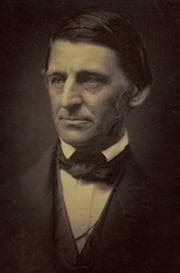
Ralph Waldo Emerson
1803–1882
Ralph Waldo Emerson was an American philosopher, essayist, and poet, best remembered for leading the Transcendentalist movement of the mid-19th century. His teachings directly influenced the growing New Thought movement of the mid-1800s. He was seen as a champion of individualism and a prescient critic of the countervailing pressures of society. Emerson gradually moved away from the religious and social beliefs of his contemporaries, formulating and expressing the philosophy of Transcendentalism in his 1836 essay, Nature. As a result of this ground-breaking work he gave a speech entitled The American Scholar in 1837, which Oliver Wendell Holmes, Sr. considered to be America's "Intellectual Declaration of Independence". Considered one of the great orators of the time, Emerson's enthusiasm and respect for his audience enraptured crowds. His support for abolitionism late in life created controversy, and at times he was subject to abuse from crowds while speaking on the topic. When asked to sum up his work, he said his central doctrine was "the infinitude of the private man." ([Source][1]) [1]: http://en.wikipedia.org/wiki/Ralph_Waldo_Emerson
View author page