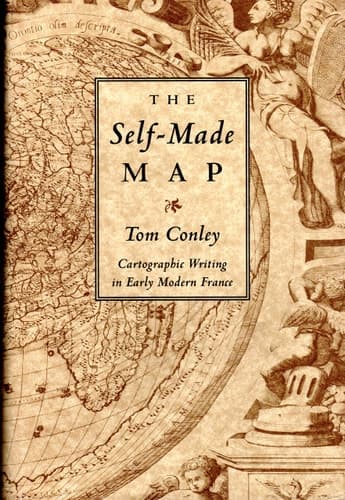
The Self-made Map Cartographic Writing in Early Modern France
Tom ConleyPublished1996
Pages372
Formathardcover
PublisherUniversity of Minnesota Press
Synopsis
"The Self-Made Map argues that during the Renaissance in France a ‘new cartographic impulse’ affected both the ‘graphic and imaginary forms of literature.’ In this wide-ranging and fascinating work, Tom Conley demonstrates that as new maps were plotted during this period, a new sense of self emerged, one defined in part by the relationship of the self to space. Conley traces the explosion of interest in mapmaking that occurred with the discovery of the New World, and discusses the commensurate rise of what he defines as cartographic writing—writing that ‘holds, penetrates, delineates, and explores space.’ Considering the works of such writers as Rabelais, Montaigne, and Descartes, Conley provides a ‘navigation’ through the printed page, revealing the emerging values of Renaissance France. In his examination of the placing of words, letters, and graphic elements in books, he exposes the playful and sometimes enigmatic relation between spatial organization and text. Conley also exposes the ideological exercise inherent in mapmaking, arguing that Renaissance cartography is inseparably bound up with the politics of the era. He undertakes close readings of maps and illustrations, discussing the necessity of viewing Renaissance maps in the context of their typographic layout, graphic reproduction, and literary and ideological import.
Richly illustrated throughout, The Self-Made Map combines studies of art, geography, history, literature, and printing to show a clear historical transformation, along the way linking geographical discoveries, printing processes, and political awareness. Conley’s provocative analysis discloses how early modern printed literature and cartography worked together to crystallize broader issues engaging the then emergent status of cultural identity, nation, and individuality."--
Recommendations
The Printing Press as an Agent of Change
by Elizabeth L. Eisenstein
Eisenstein does for print culture what Conley does for cartographic writing—she traces how the materiality of the printed page itself reshaped thought and identity across early modern Europe. You'll find the same meticulous attention to how *physical* books changed consciousness, but Eisenstein pulls back to show the continent-wide implications of what Conley examines through French literature and maps.
View book
The Savage Detectives A Novel
by Roberto Bolaño
This is your surprise recommendation: a sprawling, formally experimental novel where the *arrangement* of text on the page—fragments, lists, conversations scattered across decades and continents—becomes inseparable from meaning, much like Conley's analysis of how Renaissance writers used spatial organization to encode ideology. Bolaño's obsession with mapping literary and geographical territories through typography echoes Conley's cartographic impulse, but filtered through postmodern fiction.
View book
Painted Prayers The Book of Hours in Medieval and Renaissance Art
by Roger S. Wieck
Pettegree gives you the material history Conley gestures toward—the actual economics and logistics of how Renaissance books were made, distributed, and read. Where Conley analyzes what cartographic writing *meant*, Pettegree shows you the printing shops, the paper supply chains, and the networks that made those books physically possible, grounding Conley's literary analysis in the gritty reality of the book trade.
View book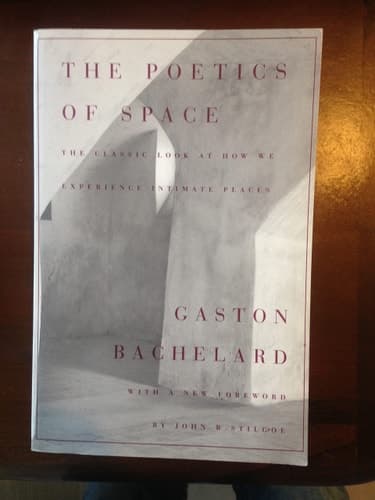
The Poetics of Space
by Gaston Bachelard
Bachelard's phenomenological meditation on how humans inhabit and imagine space offers a philosophical complement to Conley's argument about the relationship between self and geography. Where Conley shows how Renaissance writers *represented* space through cartographic impulses, Bachelard explores the deeper psychology of how space shapes consciousness—think of it as the interior architecture underlying Conley's exterior maps.
View book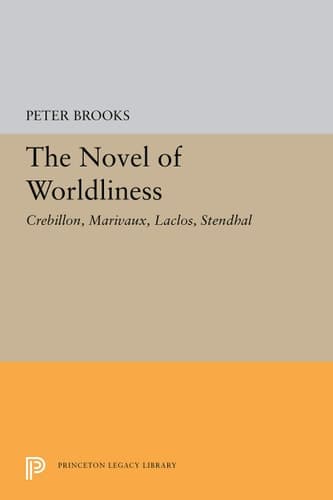
The Novel of Worldliness: Crebillon, Marivaux, Laclos, Stendhal (Princeton Legacy Library, 1990)
by Peter Brooks
Robbins traces how literature engages with global space and cultural identity across centuries—he's asking similar questions to Conley about how texts *position* readers within larger geographical and political frameworks. Published in 1998, this gives you a more contemporary theoretical lens on the cartographic impulse Conley identifies, applying it beyond Renaissance France to show how this impulse evolved and persisted.
View bookAbout Tom Conley
Biography coming soon.
View author page