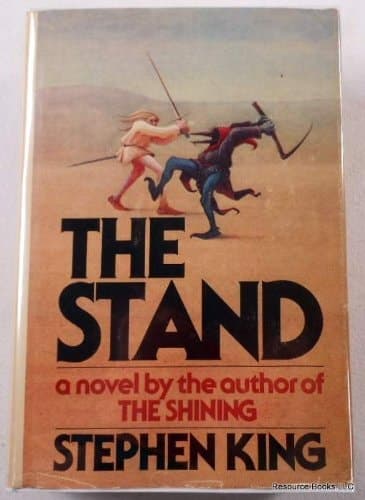
Synopsis
This is the way the world ends: with a nanosecond of computer error in a Defense Department laboratory and a million casual contacts that form the links in a chain letter of death.
And here is the bleak new world of the day after: a world stripped of its institutions and emptied of 99 percent of its people. A world in which a handful of panicky survivors choose sides -- or are chosen. A world in which good rides on the frail shoulders of the 108-year-old Mother Abigail -- and the worst nightmares of evil are embodied in a man with a lethal smile and unspeakable powers: Randall Flagg, the dark man.
In 1978 Stephen King published The Stand, the novel that is now considered to be one of his finest works. But as it was first published, The Stand was incomplete, since more than 150,000 words had been cut from the original manuscript.
Now Stephen King's apocalyptic vision of a world blasted by plague and embroiled in an elemental struggle between good and evil has been restored to its entirety. The Stand : The Complete And Uncut Edition includes more than five hundred pages of material previously deleted, along with new material that King added as he reworked the manuscript for a new generation. It gives us new characters and endows familiar ones with new depths. It has a new beginning and a new ending. What emerges is a gripping work with the scope and moral comlexity of a true epic.
For hundreds of thousands of fans who read The Stand in its original version and wanted more, this new edition is Stephen King's gift. And those who are reading The Stand for the first time will discover a triumphant and eerily plausible work of the imagination that takes on the issues that will determine our survival.
Recommendations
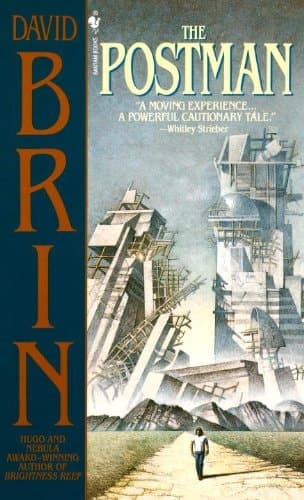
The Postman
by David Brin
Like King, Brin constructs an entire civilization from scratch after collapse, but he's more interested in how survivors rebuild meaning and identity than in cosmic good-versus-evil. Where The Stand gives you Randall Flagg as pure malevolence, The Postman explores how ordinary people become either tyrants or heroes through the choices they make in a power vacuum—it's the philosophical twin to King's moral clarity.
View book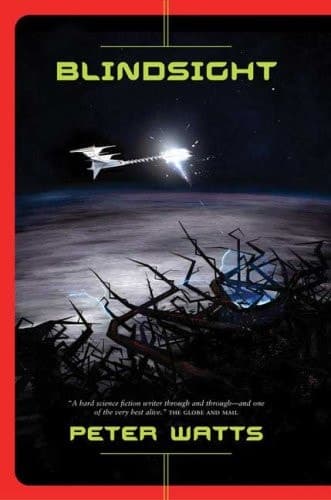
Blindsight
by Peter Watts
This is the curveball recommendation: it's hard sci-fi rather than horror-epic, but it shares The Stand's obsession with what makes us human when everything familiar is stripped away. Watts takes King's plague-as-great-equalizer concept and asks a darker question: what if consciousness itself is the liability? The claustrophobic dread and philosophical weight will resonate with readers who loved The Stand's existential stakes.
View book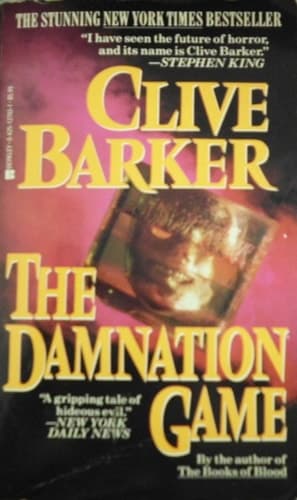
The Damnation Game
by Clive Barker
Barker channels King's gift for making evil tangible and seductive—his antagonist has that same magnetic, corrupting presence as Flagg—but Barker leans harder into baroque horror and psychological torment. If you found yourself fascinated by the dark man's sections in The Stand, this will scratch that itch for a villain who's genuinely compelling rather than just a plot obstacle.
View book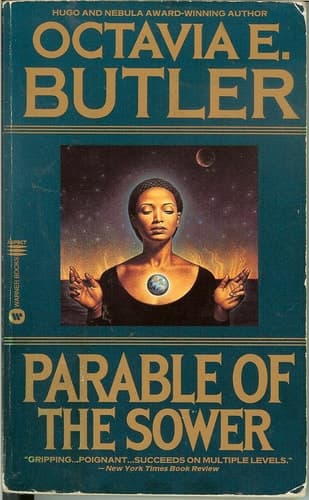
Parable of the Sower
by Octavia E. Butler
Published in 1993, this one's from a different era and brings a completely different sensibility to societal collapse—Butler writes through the eyes of a young Black woman building community in a fragmenting America, where survival means creating new belief systems rather than choosing between good and evil. It has The Stand's scope and moral seriousness, but Butler's vision is grittier, more grounded in systemic inequality, and ultimately more hopeful about human adaptation.
View book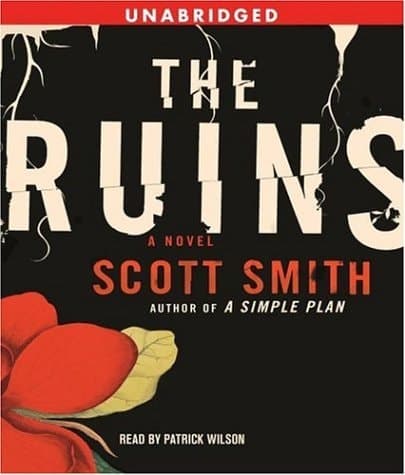
The Ruins
by Scott Smith
Smith takes King's formula of ordinary people trapped in an impossible situation and strips away the supernatural—there's no Randall Flagg here, just nature itself as an implacable, indifferent force. The claustrophobia and the way characters fracture under pressure will feel familiar, but Smith's refusal to offer moral clarity or redemption gives it a bleakness that even The Stand's darker moments don't quite reach.
View bookAbout Stephen King
S
Stephen King
Born 1947
Stephen Edwin King (born September 21, 1947) is an American author of horror, supernatural fiction, suspense, crime, science-fiction, and fantasy novels. His books have sold more than 350 million copies, and many have been adapted into films, television series, miniseries, and comic books. King has published 63 novels, including seven under the pen name Richard Bachman, and five non-fiction books. He has also written approximately 200 short stories, most of which have been published in book collections. King has received Bram Stoker Awards, World Fantasy Awards, and British Fantasy Society Awards. In 2003, the National Book Foundation awarded him the Medal for Distinguished Contribution to American Letters. He has also received awards for his contribution to literature for his entire bibliography, such as the 2004 World Fantasy Award for Life Achievement and the 2007 Grand Master Award from the Mystery Writers of America. In 2015, he was awarded with a National Medal of Arts from the U.S. National Endowment for the Arts for his contributions to literature. He has been described as the "King of Horror", a play on his surname and a reference to his high standing in pop culture.
View author page