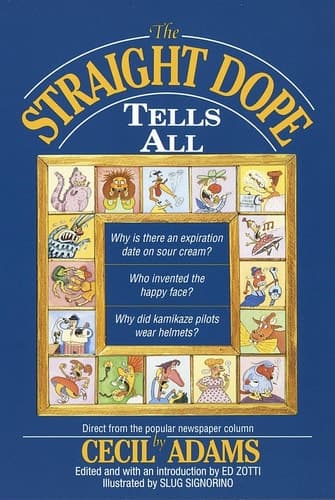
The Straight Dope Tells All
Cecil AdamsPublished1998
Pages288
Formatpaperback
PublisherRandom House Publishing Group
Synopsis
IF KNOWLEDGE WAS POWER, CECIL ADAMS WOULD RULE THE WORLD!
It's true! For the past twenty-five years, in his books and weekly newspaper column, world-history genius Cecil Adams has been patiently explaining to the Teeming Millions how the world works. He answered questions such as how do porcupines mate, what exactly does Barney Rubble do for a living, and where is Einstein's brain? His answers changed your life. Or at least settled a bet with a loved one. But surely, you are thinking, all the salient facts of the universe have been ascertained by now. Ha! Get a load of the mysteries The Master explores in this landmark volume:
¸ If Teflon is such a nonsticky substance, how do they get it to stick to the pan?
¸ Is the Great Cabal implanting microchips in our brains?
¸ Do fluorescent lights cause cataracts?
¸ What do Scotsmen wear under those kilts?
¸ Can some people extinguish street lamps by force of their bodily emanations?
¸ Is the U.S. Government really hiding alien spaceships?
Recommendations
Gödel, Escher, Bach: An Eternal Golden Braid
by Douglas Hofstadter
Like Adams, Hofstadter takes seemingly impossible questions—how does consciousness emerge from neurons? can a system describe itself?—and walks you through the logic with infectious enthusiasm and playful digressions. Both writers share that rare gift of making you feel genuinely clever while learning something that actually matters, punctuated with jokes that land because the reasoning is sound.
View book
The Annotated Sherlock Holmes. Volume II (Volume II(2))
by Arthur Conan : Barring-Gould, William S. Doyle (Editor)
This is the surprise pick: rather than just reading Holmes stories, Baring-Gould's annotations function exactly like Adams's column—he pauses constantly to answer the questions the text raises (What was Watson's first wife's maiden name? What London address is 221B really near?). It's detective work about detective work, and Adams fans will recognize that same satisfaction of having a nagging question finally settled with evidence.
View book
The Twilight Labyrinth Why Does Spiritual Darkness Linger Where It Does?
by George Otis, Jr.
Cox channels Adams's spirit perfectly—he takes a question that sounds impossibly abstract and breaks it down through concrete examples and genuine wonder. Where Adams asks 'what's under a kilt?', Cox asks 'what does energy actually mean?', but both arrive at answers that feel both surprising and inevitable, delivered with the confidence of someone who genuinely enjoys explaining things.
View book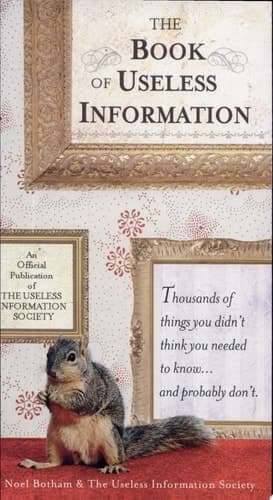
The Book of Useless Information
by Noel Botham
This is the closest structural match—a collection of trivia and odd facts organized by category, answering questions you didn't know you had (Do goldfish have memories? Can you die from hiccups?). It's pure Adams DNA: the delight isn't in the information itself but in the relief of finally knowing something you've always wondered about, no matter how obscure.
View book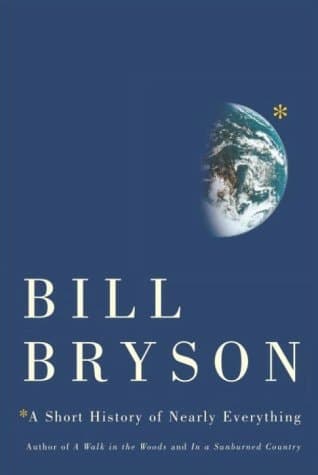
A Short History of Nearly Everything
by Bill Bryson
Bryson writes like Adams sounds—conversational, digressive, genuinely amused by how weird the world is—but stretched across the entire history of science and discovery. He'll explain how we know the age of rocks, then pause to marvel at how unlikely it is that we figured this out at all. It's Adams's curiosity scaled up to planetary and cosmic scope, with the same underlying message: reality is stranger and more wonderful than the myths we tell about it.
View bookAbout Cecil Adams
Biography coming soon.
View author page