Synopsis
The masterpiece of Nobel Prize winner Albert Camus, now in a striking American English translation, The Stranger remains vital for its unsettling insights into the impossibility of moral certainty in the face of violence.
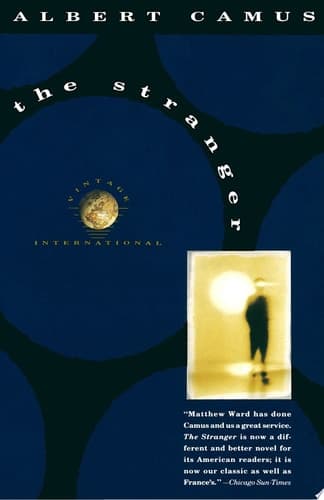
“Matthew Ward has done Camus and us a great service. The Stranger is now a different and better novel for its American readers; it is now our classic as well as France’s.”—Chicago Sun-Times
Since it was first published in English, in 1946, Albert Camus’s first novel, The Stranger (L’etranger), has had a profound impact on millions of American readers. Through this story of an ordinary man who unwittingly gets drawn into a senseless murder on a sundrenched Algerian beach, Camus explored what he termed “the nakedness of man faced with the absurd.”
Now, in this illuminating translation, extraordinary for its exactitude and clarity, the original intent of The Stranger is made more immediate. This haunting novel has been given a new life for generations to come.
Recommendations
Generating recommendations…
Our AI is preparing recommendations for The Stranger. This usually takes under a minute.
About Albert Camus

Albert Camus
1913–1960
Albert Camus was a French Algerian author, philosopher, and journalist who was awarded the Nobel Prize for Literature in 1957. He was a key philosopher of the 20th-century and his most famous work is the novel *L'Étranger* (*The Stranger*). In 1949, Camus founded the Group for International Liaisons within the Revolutionary Union Movement, which was a group opposed to some tendencies of the surrealistic movement of André Breton. Camus was the second-youngest recipient of the Nobel Prize for Literature - after Rudyard Kipling - when he became the first African-born writer to receive the award. He is the shortest-lived of any literature laureate to date, having died in an automobile accident just over two years after receiving the award. He is often cited as a proponent of existentialism, the philosophy that he was associated with during his own lifetime, but Camus himself rejected this particular label. In an interview in 1945, Camus rejected any ideological associations: "No, I am not an existentialist. Sartre and I are always surprised to see our names linked…"
View author page