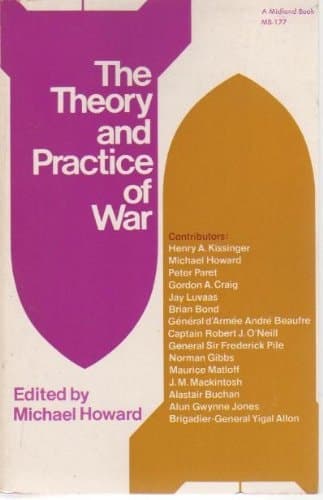
The Theory and Practice of War
Michael HowardPublished1975
Pages374
Formatpaperback
PublisherIndiana University Press
Synopsis
Edited by Michael Howard
Recommendations
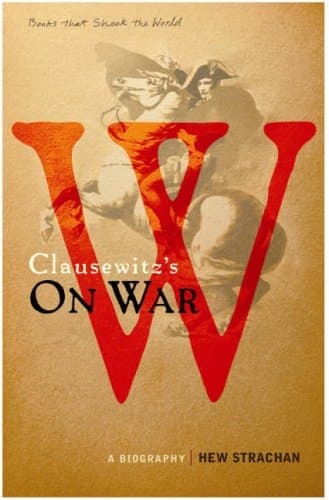
Carl Von Clausewitz's "On War"
by Hew Strachan
Since you've engaged with Howard's modern analysis of warfare, you'll find Clausewitz's 19th-century foundational text absolutely essential—Howard himself was deeply influenced by this work. Where Howard examines how theory meets practice across different eras, Clausewitz gives you the philosophical bedrock that shaped military thinking for two centuries, and you'll spot Howard's arguments in dialogue with Clausewitz throughout.
View book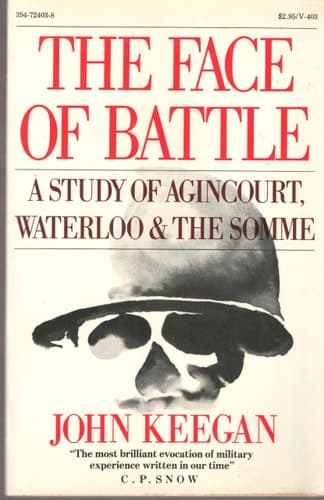
The Face of Battle
by John Keegan
Keegan does something Howard hints at but doesn't fully pursue—he strips away the grand strategy to show you what actually happens on the ground at Agincourt, Waterloo, and the Somme. His approach is almost anthropological, treating soldiers as people rather than units, which gives you a visceral counterpoint to the theoretical frameworks you've just finished exploring.
View book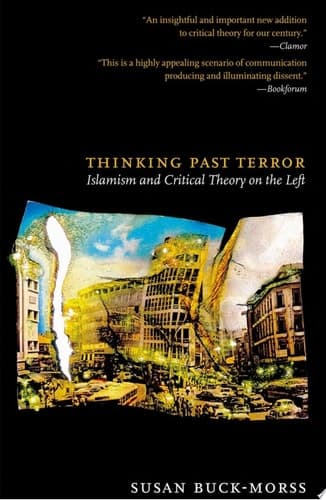
Thinking Past Terror Islamism and Critical Theory on the Left
by Susan Buck-Morss
Here's the curveball: Kahneman's exploration of decision-making under uncertainty directly illuminates why military planners fail despite sound theory. His work on cognitive biases and heuristics explains the gap between what Howard's theorists prescribe and what actually happens when humans must decide under pressure—it's the psychology behind the practice of war.
View book
The Thirty Years War
by C. V. Wedgwood
Wedgwood writes military history as narrative rather than analysis, but she's meticulous about showing how 17th-century commanders actually grappled with logistics, politics, and the fog of war. It's a perfect case study for testing Howard's frameworks against a conflict where religious ideology, dynastic ambition, and military innovation collided in ways that defied neat categorization.
View book
The Evolution of Cooperation Revised Edition
by Robert Axelrod
Axelrod approaches conflict through game theory and evolutionary biology, showing how cooperation emerges even among adversaries—a perspective that reframes much of what Howard discusses about deterrence and strategy. His famous Prisoner's Dilemma tournaments offer a mathematical language for understanding why nations behave as they do, giving you a completely different lens on the theory-practice relationship.
View bookAbout Michael Howard
Biography coming soon.
View author page