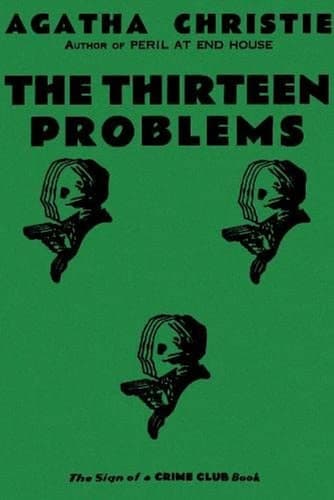
The Thirteen Problems
Agatha ChristiePublished2005
Pages250
Formathardcover
PublisherHarperCollins Publishers Limited
Synopsis
A facsimile first edition hardback of the Miss Marple books, published to mark the 75th anniversary of her first appearance and to celebrate her new-found success on television.
When The Murder at the Vicarage was published in October 1930, little did the literary world realise that Agatha Christie, already famous for her early Poirot titles, was introducing a character who would become the best-loved female sleuth of all time. The 14 Marple books would appear at intervals over the next 49 years, with Miss Marple's Final Cases published in 1979, three years after Agatha's death.
To mark the 75th anniversary of Miss Marple's first appearance, and to celebrate her renewed fortunes as a primetime television star, this collection of facsimile first editions will be the perfect way to enjoy these books in their original form - 12 novels and two short story collections. Reproducing the original typesetting and formats from the first editions from the Christie family's own archive copies, these books sport the original covers which have been painstakingly restored from the best available copies, reflecting five decades of iconic cover design.
Recommendations
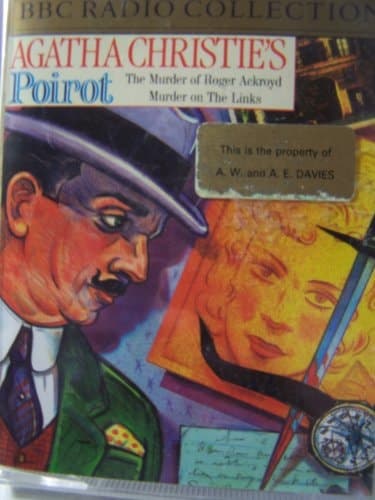
Agatha Christie's Poirot : The Murder of Roger Ackroyd and Murder on the Links/ Cassettes (Bbc Radio Presents - Abridged Edition)
by Agatha Christie
Wait—I know you've just finished a Marple collection, but this is the Poirot novel that changed detective fiction forever. Christie pulls off a narrative trick here that makes you reconsider everything you thought you knew about unreliable narrators, and it's the kind of puzzle-box construction that rewards a second read the way The Thirteen Problems does.
View book
The Moonstone, by Wilkie Collins
by Jean-Pierre Naugrette
This is the Victorian ancestor of everything Miss Marple does—a mystery told through multiple perspectives where ordinary people (servants, spinsters, minor characters) notice what the 'important' men miss. Collins writes with the same conviction that small-town observation and domestic detail are the keys to understanding crime, and the pacing has that same page-turning quality despite being published in 1868.
View book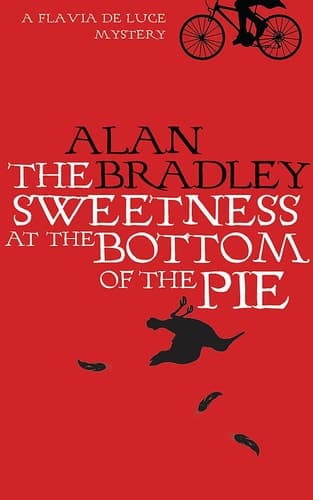
The Sweetness at the Bottom of the Pie
by Alan Bradley
This is Flavia de Luce's debut, and she's essentially what you get if Miss Marple had been a precocious eleven-year-old chemistry prodigy in 1950s England. Bradley captures that same pleasure in watching a sharp mind notice the telling detail others overlook, but adds a coming-of-age layer and a protagonist who's genuinely dangerous in her single-mindedness—it's Marple's observational method applied with youthful recklessness.
View book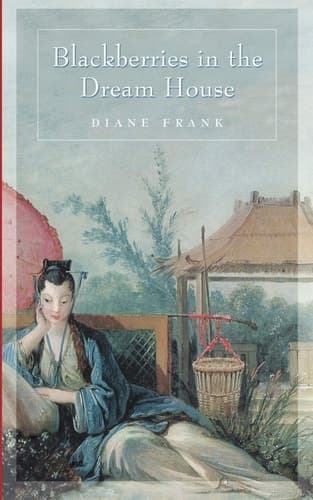
Blackberries in the Dream House
by Diane Frank
This is my surprise pick, and hear me out: Machado investigates a relationship the way Miss Marple investigates a murder—by noticing patterns, contradictions, and what people *don't* say. It's a memoir structured like a mystery, where the author pieces together how she became trapped in an abusive relationship by examining small moments and social scripts. It has that same satisfaction of watching someone brilliant connect dots others miss, but applied to emotional truth rather than whodunit plotting.
View book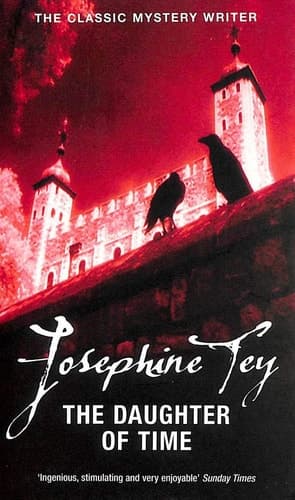
The Daughter of Time
by Josephine Tey
Tey's detective (Inspector Grant) solves a 500-year-old historical mystery from a hospital bed using only books and conversation—it's pure intellectual detective work, the kind where Miss Marple would excel. The novel treats historical research like a crime scene investigation, and Tey has that same dry wit and faith in logic that makes Christie's work so satisfying. Plus, it's a standalone, so you can dip in without committing to another series.
View bookAbout Agatha Christie
A
Agatha Christie
1890–1976
Agatha Mary Clarissa Miller was born in Torquay, Devon, in the United Kingdom, the daughter of a wealthy American stockbroker. Her father died when she was eleven years old. Her mother taught her at home, encouraging her to write at a very young age. At the age of 16, she went to Mrs. Dryden's finishing school in Paris to study singing and piano. In 1914, at age 24, she married Colonel Archibald Christie, an aviator in the Royal Flying Corps. While he went away to war, she worked as a nurse and wrote her first novel, The Mysterious Affair at Styles (1920), which wasn't published until four years later. When her husband came back from the war, they had a daughter. In 1928 she divorced her husband, who had been having an affair. In 1930, she married Sir Max Mallowan, an archaeologist and a Catholic. She was happy in the early years of her second marriage, and did not divorce her husband despite his many affairs. She travelled with her husband's job, and set several of her novels set in the Middle East. Most of her other novels were set in a fictionalized Devon, where she was born. Agatha Christie is credited with developing the "cozy style" of mystery, which became popular in, and ultimately defined, the Golden Age of fiction in England in the 1920s and '30s, an age of which she is considered to have been Queen. In all, she wrote over 66 novels, numerous short stories and screenplays, and a series of romantic novels using the pen name Mary Westmacott. She was the single most popular mystery writer of all time. In 1971 she was made a Dame Commander of the Order of the British Empire.
View author page