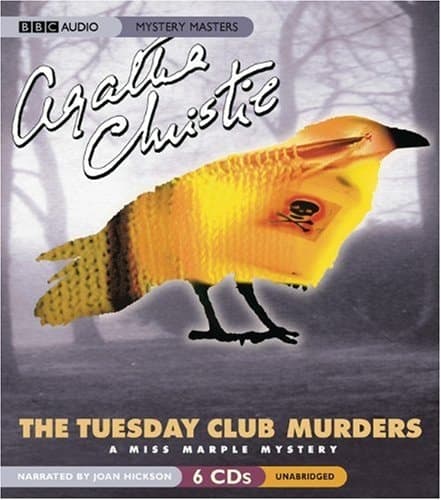
The Tuesday Club Murders
Agatha ChristiePublished2004
Pages7
Formataudiobook
PublisherBBC Audiobooks America
Synopsis
A collection of mystery stories featuring the Tuesday Night Club illustrates the sleuthing talents of elderly spinster Miss Jane Marple, who solves the most intricate of crimes with the same methodical approach she applies to her knitting projects. Read by Joan Hickson. Book available.
Recommendations
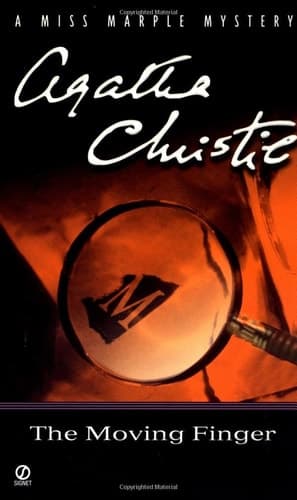
The Moving Finger
by Agatha Christie
Wait—I know what you're thinking. But hear me out: if you loved Miss Marple's particular gift for reading human nature through village gossip and small-town observation, this is her at her absolute best. She's solving a poison-pen letter mystery where the real crime is understanding why people say what they do, which is pure Marple methodology applied to psychological detective work rather than locked-room puzzles.
View book
The Moonstone, by Wilkie Collins
by Jean-Pierre Naugrette
Published in 1868, this is the grandmother of the detective novel—and it shares Miss Marple's belief that ordinary people, observed carefully, reveal everything. Collins structures the mystery through multiple narrators, each convinced they understand what happened, but truth emerges only when you read between the lines the way Miss Marple reads between the stitches of village life. It's methodical, intricate, and deeply satisfying.
View book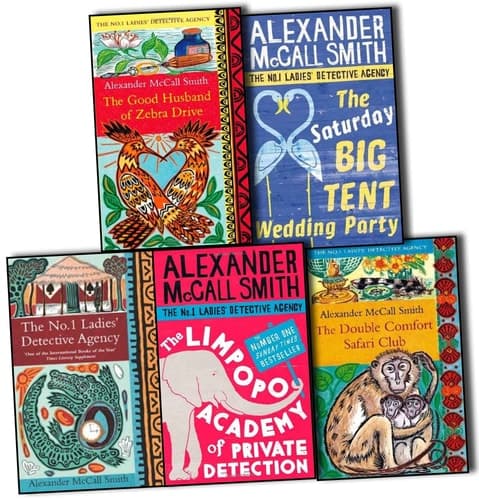
The No. 1 Ladies' Detective Agency
by Alexander McCall Smith
Precious Ramotswe is Miss Marple's spiritual cousin—a woman of mature years who solves Botswana's mysteries not through forensics but through understanding human nature, common sense, and a gift for asking the right questions over a cup of tea. McCall Smith writes with warmth and gentle humor, and like Christie, he trusts that the smallest details of how people live reveal everything about who they are.
View book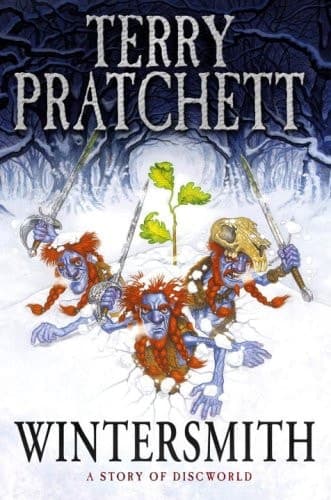
Wintersmith
by Terry Pratchett
This is my surprise pick—a Victorian con-artist novel that seems like it has nothing to do with cozy mysteries, but Waters constructs her plot with the same architectural precision Miss Marple uses to solve crimes. Every detail matters; nothing is wasted. And like the best Christie stories, the pleasure comes from watching a brilliant mind work backwards from effect to cause, unraveling layers of deception with absolute logic.
View book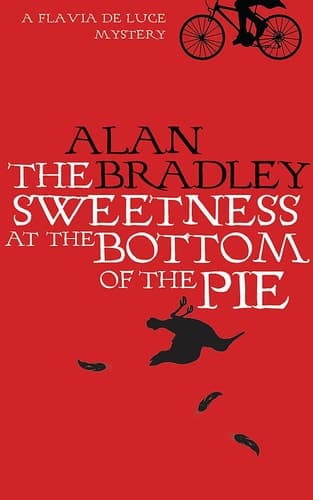
The Sweetness at the Bottom of the Pie
by Alan Bradley
Flavia de Luce is a young chemistry prodigy solving mysteries in 1950s England with the same observational brilliance and methodical thinking Miss Marple brings to her cases—except Flavia weaponizes her knowledge of poisons and forensics. Bradley clearly studied Christie's technique: the way clues accumulate, the way motive matters more than opportunity, and the satisfaction of watching someone think their way to truth.
View bookAbout Agatha Christie
A
Agatha Christie
1890–1976
Agatha Mary Clarissa Miller was born in Torquay, Devon, in the United Kingdom, the daughter of a wealthy American stockbroker. Her father died when she was eleven years old. Her mother taught her at home, encouraging her to write at a very young age. At the age of 16, she went to Mrs. Dryden's finishing school in Paris to study singing and piano. In 1914, at age 24, she married Colonel Archibald Christie, an aviator in the Royal Flying Corps. While he went away to war, she worked as a nurse and wrote her first novel, The Mysterious Affair at Styles (1920), which wasn't published until four years later. When her husband came back from the war, they had a daughter. In 1928 she divorced her husband, who had been having an affair. In 1930, she married Sir Max Mallowan, an archaeologist and a Catholic. She was happy in the early years of her second marriage, and did not divorce her husband despite his many affairs. She travelled with her husband's job, and set several of her novels set in the Middle East. Most of her other novels were set in a fictionalized Devon, where she was born. Agatha Christie is credited with developing the "cozy style" of mystery, which became popular in, and ultimately defined, the Golden Age of fiction in England in the 1920s and '30s, an age of which she is considered to have been Queen. In all, she wrote over 66 novels, numerous short stories and screenplays, and a series of romantic novels using the pen name Mary Westmacott. She was the single most popular mystery writer of all time. In 1971 she was made a Dame Commander of the Order of the British Empire.
View author page