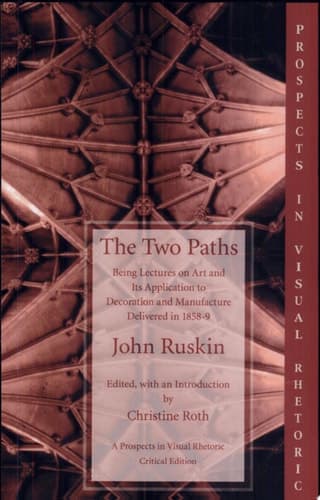
Synopsis
In The Two Paths, Ruskin connects his theories of art with economic and practical life. The central theme of Ruskin's theories of art was that contented individuals-working within a just society and striving to capture the essence of nature-produce fine and noble art, while corrupt and despondent individuals-working within an unjust society and relying on the tools of the machine age-produce inferior art. Ruskin's essays anticipate and complement theoretical approaches by critics such as Walter Benjamin, Theodor Adorno, and Max Horkheimer. Offering a reconsideration of the rhetorical tradition from a visual perspective, this Prospects in Visual Rhetoric Critical Edition is the only edition of The Two Paths currently in print. The introductions and annotations were designed to facilitate critical discussions of Ruskin's theories of art, his role as a social reformer, his visual rhetoric, and the historical/political contexts of his work. The editor's notes define names and cultural allusions in the text, which also includes all appendices and Ruskin's own introduction and illustrations. About the Author John Ruskin (1819-1900), best known for his studies of design and its social and historical implications, is perhaps the greatest critic of culture and art in English history. About the Editor Christine Roth is assistant professor of English at the University of Wisconsin - Oshkosh, where she teaches and writes about nineteenth-century British literature and the Pre-Raphaelite movement.
Recommendations
Generating recommendations…
Our AI is preparing recommendations for The Two Paths Being Lectures on Art and Its Application to Decoration and Manufacture Delivered in 1858-9. This usually takes under a minute.
About John Ruskin
J
John Ruskin
1819–1900
English writer and art critic
View author page