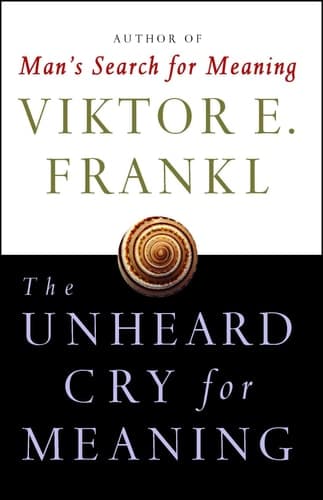
The Unheard Cry for Meaning Psychotherapy and Humanism
Viktor E. FranklPublished1979
Pages196
Formatpaperback
PublisherTouchstone
Synopsis
Upon his death in 1997, Viktor E. Frankl was lauded as one of the most influential thinkers of our time. The Unheard Cry for Meaning marked his return to the humanism that made Man's Search for Meaning a bestseller around the world. In these selected essays, written between 1947 and 1977, Dr. Frankl illustrates the vital importance of the human dimension in psychotherapy. Using a wide range of subjects—including sex, morality, modern literature, competitive athletics, and philosophy—he raises a lone voice against the pseudo-humanism that has invaded popular psychology and psychoanalysis. By exploring mankind's remarkable qualities, he brilliantly celebrates each individual's unique potential, while preserving the invaluable traditions of both Freudian analysis and behaviorism.
Recommendations
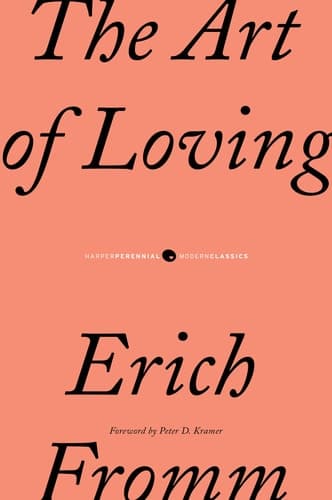
The Art of Loving
by Erich Fromm
Fromm shares Frankl's conviction that modern psychology has lost sight of what makes us fundamentally human, and he tackles this through the lens of love as a learned skill rather than a feeling. Where Frankl argues against reductionism in psychotherapy, Fromm dismantles the commercialization of human connection with the same philosophical rigor—you'll find the same measured, humanistic voice pushing back against the dehumanizing currents of mid-century thought.
View book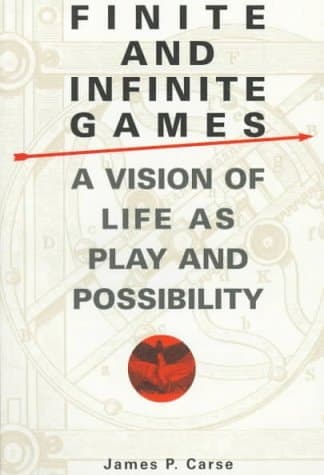
Finite and Infinite Games
by James P. Carse
This is a departure from traditional psychology texts, but it captures something essential that Frankl was after: the idea that how we frame meaning determines how we live. Carse writes in aphorisms about competition, mortality, and purpose in a way that feels like a philosophical companion piece to Frankl's essays—both authors are asking 'what are we really playing for?' but Carse approaches it through game theory and paradox rather than clinical observation.
View book
The Courage to be
by Paul Tillich
Tillich, a theologian and existentialist, explores anxiety and authenticity in ways that directly complement Frankl's work—he's asking similar questions about what sustains human dignity in the face of meaninglessness, but through the language of existential philosophy and theology rather than psychotherapy. The two authors would have rich conversations about the relationship between faith, freedom, and the courage required to live authentically.
View book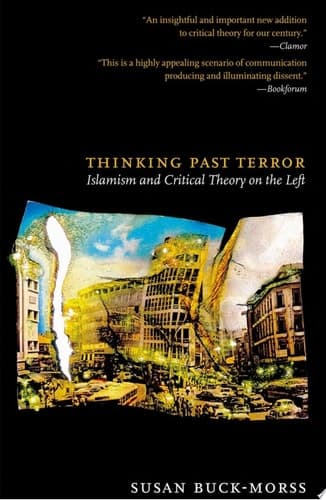
Thinking Past Terror Islamism and Critical Theory on the Left
by Susan Buck-Morss
Here's your surprise pick: Kahneman's exploration of cognitive biases and decision-making might seem worlds away from Frankl's humanism, but he's actually documenting the systematic ways our minds fail to see the full humanity in ourselves and others. Reading this after Frankl gives you the neuroscience behind why Frankl's warnings about reductionism matter—Kahneman shows us exactly how easily we reduce complex human behavior to simple patterns and heuristics.
View book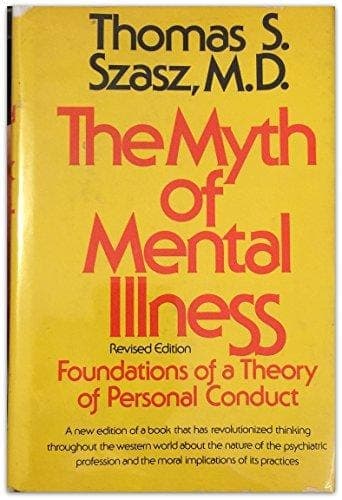
The Myth of Mental Illness: Foundations of a Theory of Personal Conduct
by Thomas Stephen Szasz
Szasz was Frankl's contemporary and fellow provocateur, arguing that psychiatry had pathologized normal human struggle in ways that stripped people of moral agency and responsibility. Where Frankl celebrates individual potential, Szasz attacks the diagnostic categories that limit it—together they form a powerful counterargument to the medicalization of meaning-making that both saw happening in their era.
View bookAbout Viktor E. Frankl
V
Viktor E. Frankl
1905–1997
Viktor Emil Frankl was an Austrian neurologist and psychiatrist as well as a Holocaust survivor. He was the founder of logotherapy, which is a form of existential analysis, the "Third Viennese School of Psychotherapy".
View author page