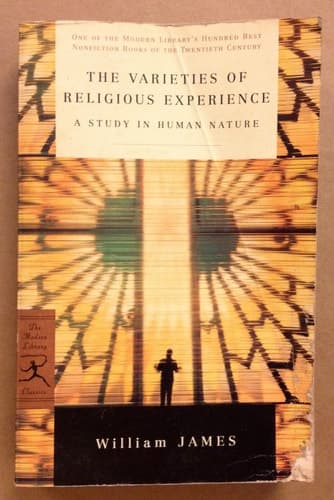
The Varieties of Religious Experience A Study in Human Nature
William JamesPublished1999
Pages640
Formatpaperback
PublisherRandom House Publishing Group
Synopsis
Selected by the Modern Library as one of the 100 best nonfiction books of all time
The Varieties of Religious Experience was an immediate bestseller upon its publication in June 1902. Reflecting the pluralistic views of psychologist turned philosopher William James, it posits that individual religious experiences, rather than the tenets of organized religions, form the backbone of religious life. James’s discussion of conversion, repentance, mysticism, and hope of reward and fears of punishment in the hereafter—as well as his observations on the religious experiences of such diverse thinkers as Voltaire, Emerson, Luther, and others—all support his thesis. Walter Houston Clark in Psychology Today deemed it “the most notable of all books in the field of the psychology of religion.”
Recommendations
Generating recommendations…
Our AI is preparing recommendations for The Varieties of Religious Experience A Study in Human Nature. This usually takes under a minute.
About William James
W
William James
1843–1916
Henry James, was an American writer, regarded as one of the key figures of 19th-century literary realism. He was the son of Henry James, Sr., a clergyman, and the brother of philosopher and psychologist William James and diarist Alice James. ([Source][1].) [1]:http://en.wikipedia.org/wiki/Henry_James
View author page