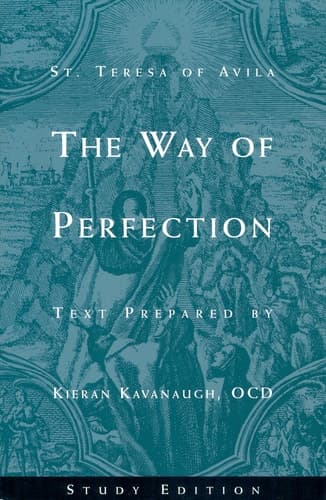
The Way of Perfection A Study Edition
Saint Teresa of AvilaPublished2000
Pages534
Formatpaperback
PublisherICS Publications
Synopsis
St. Teresa of Avila is an unsurpassed teacher of Christian prayer, and in The Way of Perfection she is at her best. Now with the help of this study edition and its helpful commentary and explanations by Teresian expert Fr. Kieran Kavanaugh, everyone can enjoy the benefits of her wisdom.
More Information
A Study Edition, with Introduction, Commentary, Discussion Questions, and Glossary.
St. Teresa of Avila is an unsurpassed teacher of Christian prayer and spirituality, and in The Way of Perfection she is at her best. Now, with the help of this study edition, everyone can enjoy the benefits of her wisdom.
In The Way of Perfection, St. Teresa gives practical counsels and advice on prayer, destined originally for the few nuns who embraced the reformed Carmelite life she established. As a handbook for spiritual formation, it presented them with the basic Christian spirituality undergirding their Constitutions and Rule.
Over the centuries, the book's appeal has reached far beyond the walls of Carmelite monasteries, and The Way of Perfection has become a spiritual classic. More and more today, Teresa's instructions speak to all those interested in prayer, providing them with basic guidelines for praying and showing how to avoid potential pitfalls. But as the readership and interest grow, so does the need for some help in working with this sixteenth-century text.
The principles and teachings in Teresa's book, first presented within the limited horizons of her own situation, clearly lend themselves to broader applications, and can work well in all walks of life. This study edition-with its introduction, commentary, notes, discussion questions, and glossary-provides what is needed to assist contemporary readers in making these applications and delving more deeply into the text's spiritual riches.
Recommendations
Saint Teresa of Avila for Every Day Reflections from the Interior Castle
by Saint Teresa (of Avila)
You've just finished Teresa's practical guide to prayer—now meet her contemporary and spiritual peer who approaches the same journey from a more mystical, poetic angle. Where Teresa gives you the map, John gives you the experience of walking it, using his seven mansions as a framework for understanding the soul's deepening union with God. His lyrical language complements Teresa's directness perfectly, and together they form a complete spiritual education.
View book
The Practice of the Presence of God Based on the Conversations, Letters, Ways, and Spiritual Principles of Brother Lawrence, as Well as on the Writings of Joseph de Beaufort
by Brother Lawrence (of the Resurrection)
Brother Lawrence takes Teresa's teachings about prayer and shows you what happens when someone actually lives them out in the mundane world—washing dishes in a monastery kitchen becomes as sacred as formal meditation. His letters and conversations are far shorter and more accessible than Teresa, yet they deepen her central insight that perfection isn't about extraordinary experiences but about ordinary moments approached with extraordinary attention.
View book
The Cloud of Unknowing
by Anonymous
This medieval English text predates Teresa by two centuries but speaks directly to her concerns about contemplative prayer and the limits of discursive thinking. Where Teresa gives you structured advice for nuns, this mysterious author offers something more radical: instructions for moving beyond words and concepts entirely. It's the historical ancestor of Teresa's approach, and reading it will show you how her teachings fit into a much longer Christian contemplative tradition.
View book
Traveling Mercies Some Thoughts on Faith
by Anne Lamott
Here's your surprise pick: a contemporary memoir that takes Teresa's spiritual principles and shows how they actually work in a messy, modern life full of addiction, doubt, and grace. Lamott writes with the same practical honesty Teresa brings to her advice, but through personal essays about raising a son, struggling with faith, and finding God in unexpected places. It's Teresa for the 21st century—less formal, more vulnerable, but equally insistent that spiritual transformation is possible.
View book
True Serenity Based on Thomas a Kempis' the Imitation of Christ
by John Kirvan
This 15th-century devotional handbook is the spiritual ancestor of everything Teresa wrote—it's the book that shaped her thinking about Christian perfection and interior transformation. Reading it after Teresa will feel like discovering the source code of her philosophy, and you'll see how she built upon, refined, and made more practical the ideals à Kempis outlined. It's shorter, more poetic, and surprisingly modern in its psychological insight about the human heart.
View bookAbout Saint Teresa of Avila
S
Saint Teresa of Avila
1515–1582
Also known as Teresa of Jesus. Spanish mystic and Roman Catholic saint who founded the religious Order of the Discalced Carmelites (OCD, for its initials in Spanish) with St. John of the Cross and wrote "The Interior Castle," "The Way of Perfection," and an autobiography
View author page