
The Wayward Bus (Twentieth-century Classics)
John SteinbeckPublished1995
Pages272
Formatpaperback
PublisherPenguin Classics
Synopsis
The ambitions, dreams, failings, and innermost thoughts of a diverse group of passengers are revealed as they travel aboard a bus along the backroads of California
Recommendations

The Grapes of Wrath John Steinbeck
by John Steinbeck
Wait—I know what you're thinking. But hear me out: if you loved the ensemble cast dynamics and the way Steinbeck captures the interior lives of ordinary people in transit, this earlier work deepens that same technique across an entire family's journey. The bus becomes a microcosm in *Wayward Bus*, but here the road itself becomes a character that tests and reveals everyone aboard.
View book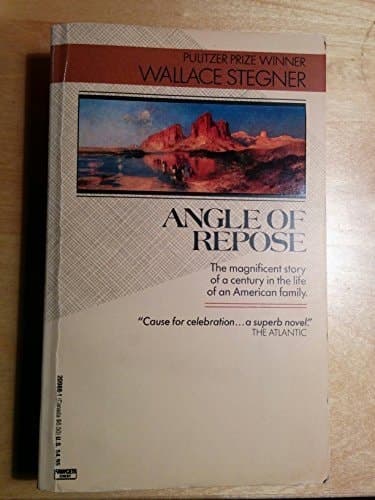
Angle of Repose
by Wallace Earle Stegner
Stegner does something similar to what Steinbeck attempts—he explores how ordinary Americans navigate ambition and disappointment—but he frames it through a grandson piecing together his grandparents' letters and journals. You get that same layered access to characters' inner lives, but filtered through memory and time, which adds a melancholy depth that complements *Wayward Bus*'s snapshot approach.
View book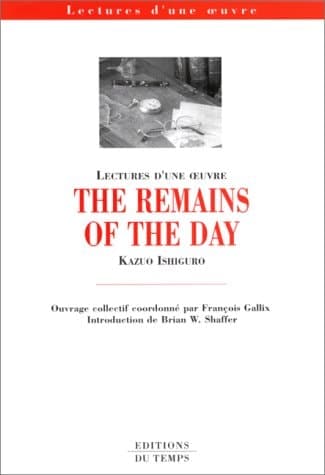
The remains of the day de Kazuo Ishiguro
by Gallix/François
Here's your surprise pick: a Japanese-British author writing about an English butler's road trip through the countryside. Like *Wayward Bus*, it's ostensibly about a journey, but the real story unfolds through what the narrator *doesn't* say—his regrets, his self-deceptions, his carefully maintained composure. Ishiguro reveals character through restraint rather than confession, which creates a completely different but equally compelling intimacy with his protagonist.
View book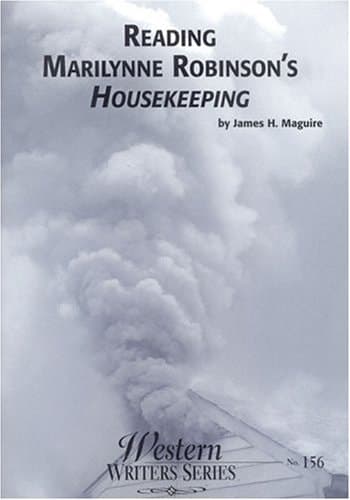
Reading Marilynne Robinson's Housekeeping (Boise State University Western Writers Series)
by James H. Maguire
Robinson writes about two sisters raised by their eccentric aunt in a small Idaho town, and while it's quieter and more lyrical than Steinbeck, it shares his gift for finding the extraordinary within ordinary lives and landscapes. The Pacific Northwest setting echoes California's backroads, but Robinson's prose has an almost dreamlike quality—she's interested in how people construct meaning and belonging in transient, uncertain circumstances.
View book
The Moviegoer
by Walker Percy
Percy's protagonist is a drifter in New Orleans trying to figure out what it all means, and like Steinbeck's passengers, he's surrounded by people living out their own small dramas and self-deceptions. But Percy writes with a philosophical edge—his characters are constantly aware of themselves as if watching their own movie—which gives the mundane observations a wry, existential humor that feels fresh compared to *Wayward Bus*'s more straightforward naturalism.
View bookAbout John Steinbeck
J
John Steinbeck
1902–1968
John Steinbeck was an American writer. He wrote the Pulitzer Prize-winning novel *The Grapes of Wrath* (1939) and the novella *Of Mice and Men* (1937). He wrote a total of 27 books, including 16 novels, six non-fiction books, and five collections of short stories. In 1962, Steinbeck received the Nobel Prize for Literature ([Source][1]). [1]:https://en.wikipedia.org/wiki/John_Steinbeck
View author page