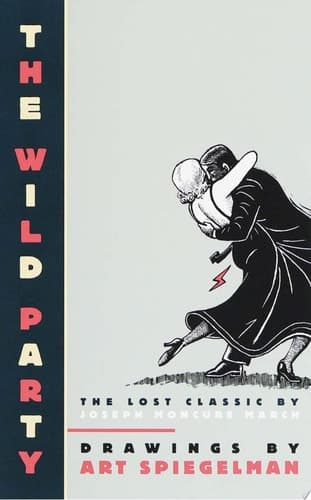
The Wild Party The Lost Classic by Joseph Moncure March
Art SpiegelmanPublished1999
Pages120
Formatpaperback
PublisherKnopf Doubleday Publishing Group
Synopsis
Art Spiegelman's sinister and witty black-and-white drawings give charged new life to Joseph Moncure March's The Wild Party, a lost classic from 1928. The inventive and varied page designs offer perfect counterpoint to the staccato tempo of this hard-boiled jazz-age tragedy told in syncopated rhyming couplets.
"Spiegelman's drawings are like demonic woodcuts: every angle, line, and curve jumps out at you. Stylishness and brutishness are in perfect accord." —The New York Times
Here is a poem that can make even readers with no time for poetry stop dead in their tracks. Once read, large shards of this story of one night of debauchery will become permanently lodged in the brain. When The Wild Party was first published, Louis Untermeyer declared: "It is repulsive and fascinating, vicious and vivacious, uncompromising, unashamed . . . and unremittingly powerful. It is an amazing tour de force."
Recommendations
Relations Ethics and the Modernist Subject in James Joyce's Ulysses, Virginia Woolf's The Waves, and Djuna Barnes's Nightwood
by AnnKatrin Jonsson
Barnes writes with the same intoxicating density and moral ambiguity as March's poem—her prose is baroque and hallucinatory, capturing the underground nightlife of 1920s Paris with characters who are simultaneously magnetic and destructive. Like The Wild Party, it's a work that refuses sentimentality while documenting the beautiful wreckage of bohemian excess, and it has that same quality of being permanently lodged in your brain after one reading.
View book
The Apocalyptic Vision of Mikhail Bulgakov's the Master and Margarita (Studies in Slavic Language & Literature)
by Edward E. Ericson
Bulgakov's novel has that same darkly comic energy and structural inventiveness as Spiegelman's visual approach—it's a story told through multiple interlocking narratives that shift tone from satirical to tragic to surreal. The syncopated rhythm you loved in March's couplets appears here as Bulgakov cuts between Soviet Moscow, Pontius Pilate's Jerusalem, and the Devil's visit to Earth, creating a dizzying momentum that mirrors the frenzy of The Wild Party.
View book
The Savage Detectives A Novel
by Roberto Bolaño
This is a risk, but hear me out: Bolaño captures that same intoxicating pull of watching brilliant, doomed people spiral through excess and artistic obsession. The novel's fragmented structure—diary entries, interviews, narrative sections—mirrors how Spiegelman's varied page designs keep you visually off-balance. Both works treat their characters' self-destruction with unflinching honesty and strange tenderness, refusing easy judgment.
View book
Invisible Cities
by Italo Calvino
A departure, but essential: if you respond to the formal inventiveness of Spiegelman's visual storytelling, Calvino's prose-poem structure will fascinate you. It's a series of vignettes describing impossible cities, each one precisely crafted and dreamlike, with that same economy of language and maximum impact that March achieves in his couplets. It's experimental without being difficult, and visually inventive on the page.
View book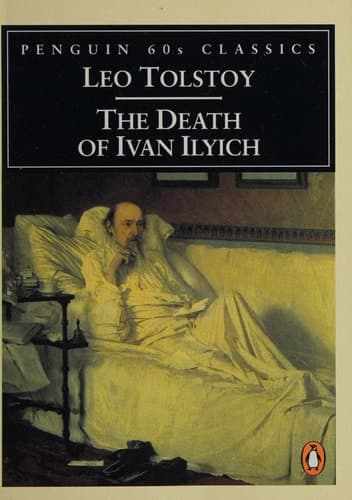
The Death of Ivan Ilyich
by Leo Tolstoy
Published in 1886, this novella shares The Wild Party's unflinching examination of how quickly a life can unravel, but Tolstoy approaches it with philosophical weight rather than jazz-age frenzy. What connects them is the intensity of focus—both works compress enormous emotional and moral complexity into a relatively brief span, and both refuse to look away from human degradation and the search for meaning within it.
View bookAbout Art Spiegelman
Biography coming soon.
View author page