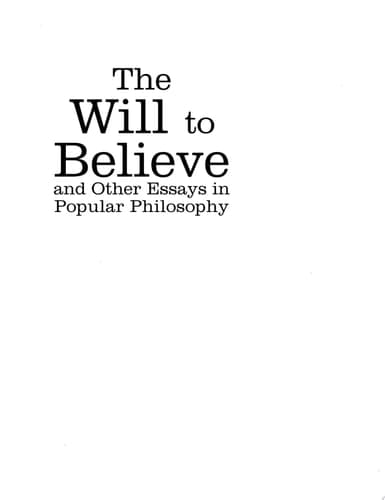
The Will to Believe and Other Essays in Popular Philosophy
William JamesPublished2006
Pages332
Formatpaperback
PublisherCosimo, Inc.
Synopsis
Here, in one volume, are the collected essays of influential American philosopher WILLIAM JAMES (1842-1910), whose justifications of religious faith and explorations of questions of morality made him one of the most popular thinkers of the 19th century. In this volume, first published in book form in 1897, James ponders such conundrums as... . Is life worth living? . The sentiment of rationality . The dilemma of determinism . The moral philosopher and the moral life . Great men and their environment . The importance of individuals . What psychical research has accomplished . and more.
Recommendations

The Struggle for Life A Companion to William James's The Varieties of Religious Experience
by Donald Capps
Wait—I know what you're thinking. But hear me out: if you loved *The Will to Believe*, this is James at his most expansive and accessible. Where those essays sketch his ideas, this book is the full orchestration—he's investigating religious experience itself through case studies and psychology, letting real human testimony do the philosophical heavy lifting. It's like watching him think through a problem in real time rather than presenting conclusions.
View book
The Problems of Philosophy
by Bertrand Russell
Russell was James's contemporary and sparring partner, and this slim book does something James would appreciate: it takes the big messy questions (What is philosophy? What can we know?) and refuses to let them calcify into dogma. Where James asks *should* we believe, Russell asks *what does it mean to believe anything at all*—and he writes with the clarity of someone who thinks philosophy should be a conversation, not a lecture.
View book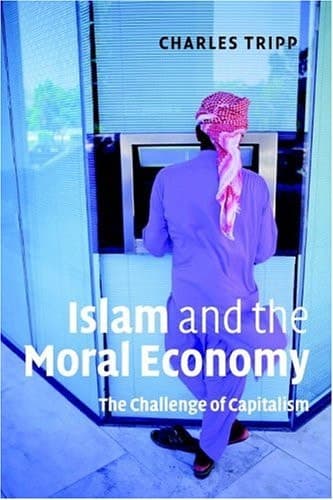
Islam and the Moral Economy The Challenge of Capitalism
by Charles Tripp
This is my surprise pick, and it's from 2016—nearly a century after James. But Bowles is doing what James did in "The Moral Philosopher and the Moral Life": he's asking how we actually *live* morally in a world of competing interests and incomplete information. Except Bowles brings evolutionary biology and behavioral economics to the table, showing how morality isn't just philosophy but something embedded in how humans cooperate. James would have devoured this.
View book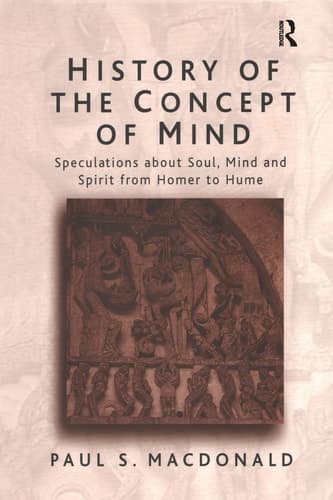
History of the Concept of Mind: Volume 1: Speculations About Soul, Mind and Spirit from Homer to Hume
by Paul S. Macdonald
Ryle takes James's psychological insights about consciousness and belief and builds a whole architecture around them—but he's arguing *against* the idea that mind and body are separate things (the ghost in the machine, as he memorably calls it). You'll recognize James's fingerprints all over Ryle's thinking, but Ryle is more combative, more willing to demolish assumptions. It's philosophy as intellectual sparring.
View book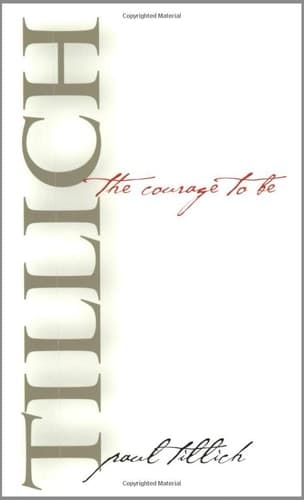
The Courage to be
by Paul Tillich
Tillich was writing in the 1950s, after two world wars had made James's optimism look almost quaint—yet he's asking a question James would recognize: how do we find meaning and faith in a world that seems fundamentally uncertain and sometimes absurd? Tillich brings existentialism and theology into conversation, and he writes with the kind of moral urgency that James had. It's *The Will to Believe* for a darker, more complicated age.
View bookAbout William James
W
William James
1843–1916
Henry James, was an American writer, regarded as one of the key figures of 19th-century literary realism. He was the son of Henry James, Sr., a clergyman, and the brother of philosopher and psychologist William James and diarist Alice James. ([Source][1].) [1]:http://en.wikipedia.org/wiki/Henry_James
View author page