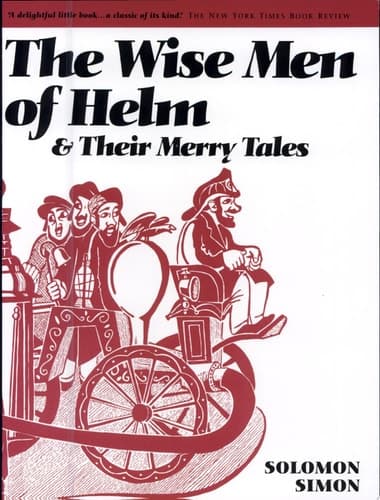
The Wise Men of Helm and Their Merry Tales
Unknown
Published1973
Pages135
Formatpaperback
PublisherBehrman House, Inc
Synopsis
These rollicking tales of the Helmites--full of both merriment and wisdom--are guaranteed to delight children of all ages. The collection of Jewish folk tales that the New York Times called "a delightful little book . . . a classic of its kind . . . full of merriment and wisdom." Illustrated with whimsical drawings, these humorous stories are just right for children. Read along as the people of Helm are faced with foolish challenges and watch how they come together as a community to merrily overcome them. The collection of stories celebrates life in Helm where the townsfolk's well-meaning but often comical actions lead to unexpected and entertaining outcomes
Recommendations

The Tales of Rabbi Nachman
by Martin Buber
Like the Helmites, Nachman's tales use apparent foolishness and paradox as gateways to spiritual insight—but where Helm's wisdom emerges through communal problem-solving, Nachman's stories operate more like parables that reward contemplation. Both collections share that distinctly Jewish sensibility of finding profound meaning in the everyday and absurd.
View book
The Phantom Tollbooth
by Norton Juster
Juster captures that same spirit of whimsy-as-instruction that makes Helm work—a boy travels through kingdoms where wordplay and logical puzzles are literal geography, and the journey teaches without preaching. The tone is lighter and more fantastical than Helm, but both books trust their readers to find the humor and the lesson simultaneously.
View book
Reading Marilynne Robinson's Housekeeping (Boise State University Western Writers Series)
by James H. Maguire
This is the curveball—a literary novel from 1980 about two sisters raised by an eccentric aunt in a decaying house by a lake. What connects it to Helm is Robinson's deep affection for her characters' peculiarities and her refusal to judge their unconventional ways; she finds beauty and meaning in what others might call foolishness, much as the Helmites' 'foolish' solutions often contain unexpected grace.
View book
The Apocalyptic Vision of Mikhail Bulgakov's the Master and Margarita (Studies in Slavic Language & Literature)
by Edward E. Ericson
Bulgakov weaves together Soviet satire, folklore, and magical realism in ways that feel structurally similar to Helm's nested stories—multiple narrative threads that comment on human folly and redemption. The Moscow sections especially capture that same blend of dark humor and genuine compassion for people caught in absurd systems, though on a much grander scale.
View book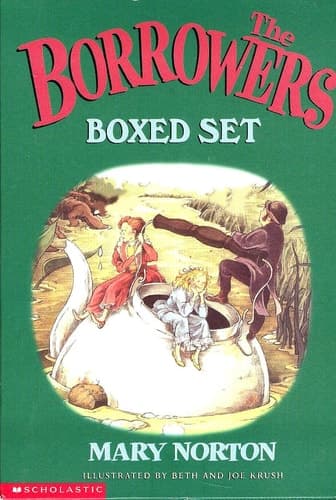
The Borrowers Boxed Set (The Borrowers, The Borrowers Afield, The Borrowers Afloat, The Borrowers Aloft with the short tale Poor Stainless, and The Borrowers Avenged) by Mary Norton (2001-09-01)
by Mary Norton
Norton creates an entire hidden civilization of tiny people living behind the walls of English houses, and like Helm, the book's heart lies in watching a small community solve problems through ingenuity and cooperation. The tone is gentler and more wistful than Helm's rollicking humor, but both celebrate how ordinary people (or in this case, extraordinary small people) navigate their world with dignity and cleverness.
View bookAbout Unknown
U
Unknown
Biography coming soon.