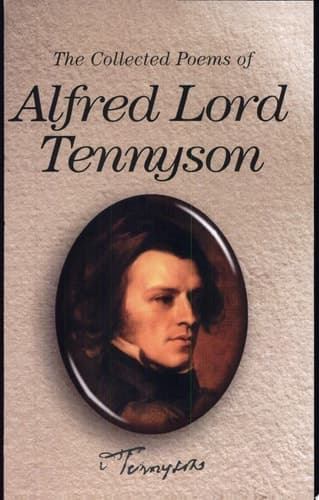
The Works of Alfred Lord Tennyson
Alfred TennysonPublished1994
Pages628
Formatpaperback
PublisherWordsworth Editions
Synopsis
Selected by Rosemary Gray.
Poignant, wry, chilling, challenging, amusing, thought-provoking and always intriguing, these accomplished tales from the pens of great writers are object-lessons in the art of creating a literary masterpiece on a small canvas. From the straightforwardly anecdotal to the more analytical of human behaviour, all are guaranteed to capture the imagination, stir the emotions, linger in the memory and whet the reader's appetite for more. In this book, Wordsworth Editions presents the modern reader with a rich variety of short stories by a host of towering literary figures ranging from Arnold Bennett to Virginia Woolf. This disparate and distinguished company of writers has rarely - if ever - met within the pages of one volume: the result is a positive feast.
Recommendations
Generating recommendations…
Our AI is preparing recommendations for The Works of Alfred Lord Tennyson. This usually takes under a minute.
About Alfred Tennyson
A
Alfred Tennyson
1809–1892
Alfred Tennyson, 1<sup>st</sup> Baron Tennyson, FRS, much better known as "Alfred, Lord Tennyson," was Poet Laureate of the United Kingdom during much of Queen Victoria's reign and remains one of the most popular poets in the English language. Tennyson excelled at penning short lyrics, "In the valley of Cauteretz", "Break, Break, Break", "The Charge of the Light Brigade", "Tears, Idle Tears" and "Crossing the Bar". Much of his verse was based on classical mythological themes, such as Ulysses, although In Memoriam A.H.H. was written to commemorate his best friend Arthur Hallam, a fellow poet and fellow student at Trinity College, Cambridge, who was engaged to Tennyson's sister, but died from a cerebral hemorrhage before they were married. Tennyson also wrote some notable blank verse including Idylls of the King, Ulysses, and Tithonus. During his career, Tennyson attempted drama, but his plays enjoyed little success. Tennyson wrote a number of phrases that have become commonplaces of the English language, including: "Nature, red in tooth and claw", "'Tis better to have loved and lost / Than never to have loved at all", "Theirs not to reason why, / Theirs but to do and die", "My strength is as the strength of ten, / Because my heart is pure", "Knowledge comes, but Wisdom lingers", and "The old order changeth, yielding place to new". He is the second most frequently quoted writer in The Oxford Dictionary of Quotations after Shakespeare.<sup>[1][1]</sup> [1]: http://en.wikipedia.org/wiki/Alfred,_Lord_Tennyson
View author page