Synopsis
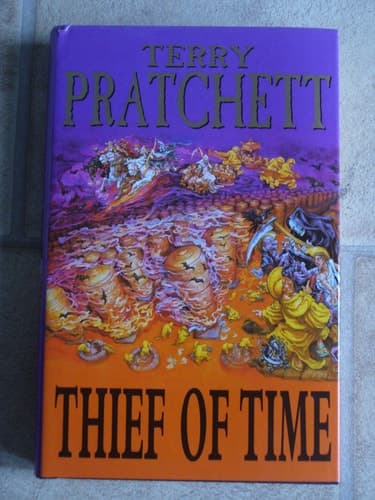
In Discworld, time is a resource managed by the highly capable Monks of History. Everybody wants more time, which is why on Discworld only the experts can manage it. While everyone always talks about slowing down, one young horologist is about to do the unthinkable. He's going to stop. Well, stop time that is, by building the world's first truly accurate clock. Which means esteemed History Monk Lu-Tze and his apprentice Lobsang Ludd have to put on some speed to stop the timepiece before it starts. For if the perfect clock starts ticking, time, as we know it, will end. And then the trouble will really begin.
Recommendations
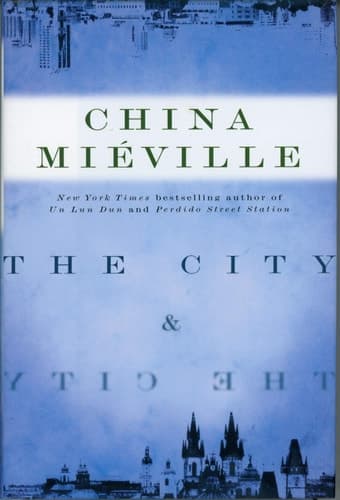
The City & The City
by China Miéville
Like Pratchett, Miéville builds an entire world around a single impossible rule—here, two cities occupying the same space where citizens must 'unsee' the other one. You'll get that same pleasure of watching characters navigate absurd constraints with absolute seriousness, plus the same dry humor about bureaucracy and authority figures trying to maintain an impossible system.
View book
The Apocalyptic Vision of Mikhail Bulgakov's the Master and Margarita (Studies in Slavic Language & Literature)
by Edward E. Ericson
Published in 1966, this Soviet-era novel shares Pratchett's gift for weaving together multiple storylines—a devil's visit to Moscow, a censored writer, and a retelling of Pontius Pilate—with the same blend of philosophical depth and comedic chaos. The Devil's matter-of-fact approach to causing mayhem has that same Pratchettian tone of treating the extraordinary as routine.
View book![Cover of Giovanni Ba[t]tista Piranesi The Prisons (le Carceri)](/_next/image?url=https%3A%2F%2Fcovers.whatshouldireadnext.com%2Feditions%2F9780486215402%2Flg.jpg&w=3840&q=75)
Giovanni Ba[t]tista Piranesi The Prisons (le Carceri)
by Giambattista Piranesi
Clarke shares Pratchett's talent for slowly revealing how a world actually works beneath its surface—here, a mysterious house of endless halls and tides. Where Thief of Time plays with time as a managed resource, Piranesi plays with memory and reality itself, and both authors trust readers to piece together the logic without spelling everything out.
View book
The Princess and the Goblin
by George MacDonald
This might seem like a gentler recommendation, but it's actually doing something Pratchett does brilliantly—using a fantasy setting to explore how institutions actually function and how one person navigates byzantine bureaucracy with kindness rather than cynicism. The court intrigue and careful attention to protocol has that same satisfying logic as the Monks of History managing their domain.
View book
The Quantum Dot A Journey Into the Future of Microelectronics
by Richard Turton
Here's your surprise pick: this is hard science fiction, not fantasy, but Rajaniemi treats time and information the way Pratchett treats time as a physical resource—as something that can be stolen, hoarded, and weaponized. The heist plot and the protagonist's relationship with his own memories echo Lobsang's journey, and you'll find the same pleasure in watching someone outwit a system by understanding its rules better than anyone else.
View bookAbout Terry Pratchett
Biography coming soon.
View author page