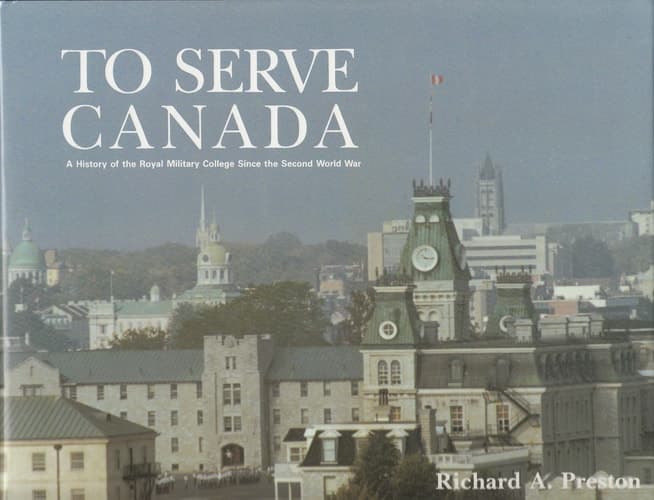
To Serve Canada A History of the Royal Military College Since the Second World War
Richard A. PrestonPublished1991
Pages248
Formathardcover
PublisherUniversity of Ottawa Press
Synopsis
During the four decades following the Second World War, the Royal Military College of Canada has adapted to the need to produce professional career officers by evolving into an academic center of excellence and one of the country's leading universities. Along the way, it has responded to the challenges of service integration and unification, bilingualism, the emergence of Collège militaire royal and Royal Roads Military College, the employment of women in non-traditional roles, Canada's changing cultural make-up, and the rapid pace of technological change. In a society in which the precepts of military service are increasingly remote, the continued competition for entrance into RMC speaks of its resilience as a centre of learning and leadership. Published in English.
Recommendations
Members of the Regiment: Army Officers' Wives on the Western Frontier, 1865-1890 (Contributions in American History)
by Michele Nacy
Simonson captures the same institutional culture and social evolution that Preston documents, but from the perspective of military spouses navigating change at a Cold War base. Where Preston's history is analytical, this novel lets you *feel* the tension between tradition and progress through intimate character moments—the way a woman's ambitions collide with an officer's career expectations mirrors how RMC itself had to reconcile its heritage with modernization.
View book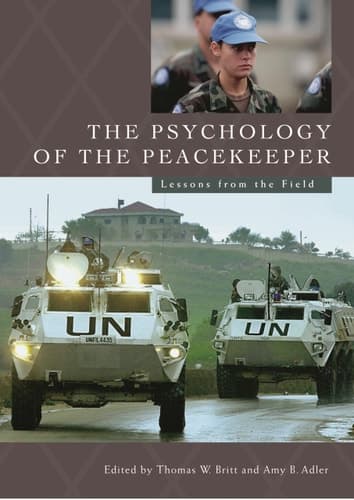
The Psychology of the Peacekeeper: Lessons from the Field (Psychological Dimensions to War and Peace)
by Thomas W. Britt
Dallaire's memoir bridges Preston's institutional history and real-world application—he's examining how officers trained in places like RMC actually operate under impossible conditions. His unflinching account of Rwanda and his reflections on military leadership and moral responsibility give you the human stakes behind the policy and curriculum changes Preston describes.
View book
The Guns of August
by Barbara Wertheim Tuchman
I'm suggesting this from an earlier decade (1962) because Tuchman's meticulous narrative history of military institutions under pressure—how rigid hierarchies and outdated thinking led to catastrophe—provides the cautionary backdrop for understanding why RMC's post-war evolution toward flexibility and academic rigor mattered so much. Preston's book is partly about learning those lessons; Tuchman shows what happens when institutions don't.
View book
The Right Stuff
by Tom Wolfe
This is your surprise recommendation—it's narrative nonfiction rather than institutional history, but Wolfe is examining the same question Preston asks: what makes a professional military institution work? He focuses on test pilots and astronauts instead of academy cadets, but his eye for how institutions select, train, and mythologize their elite will resonate deeply. Plus, his prose style is the opposite of academic, which might be a refreshing palate-cleanser.
View book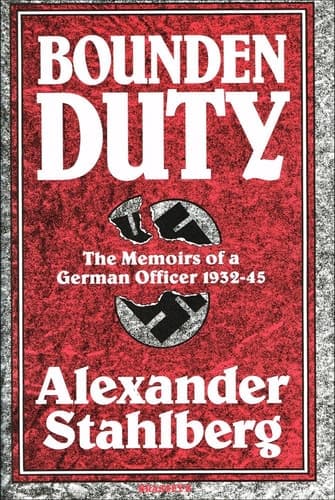
Bounden Duty: The Memoirs of a German Officer, 1932-1945 (English, German and German Edition)
by Alexander Stahlberg
Gates spent decades in military institutions and policy, and his memoir shows you the long-term consequences of the kinds of changes Preston documents—bilingualism, integration, technological transformation, women in combat roles. He's wrestling with how institutions adapt (or fail to) when the world demands it, which is exactly Preston's central concern, but from a decision-maker's vantage point rather than a historian's.
View bookAbout Richard A. Preston
Biography coming soon.
View author page