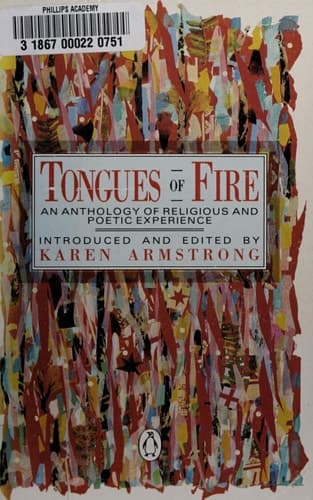
Tongues of Fire An Anthology of Religious and Poetic Experience
Karen ArmstrongPublished1987
Pages351
Formatpaperback
PublisherPenguin
Synopsis
Inspired by the Channel 4 series of the same name, Tongues of Fire is a rich and exciting anthology which touches on all aspects of the religious experience. Religion today is too easily dismissed as an irrevelance in the lives of those with no particular faith. Tongues of Fire sharpes revokes this view by bringing together a number of works that will be well known to most readers with many others, drawn from a wide variety of sources and cultures, that will not. Thus Milton, Vaughn, Donne and Blake are found alongside Judah Ha-Levi and Jalallu'ddin Rumi, divided not by faith and belief but by theme and treatment into a series of chapters that accentuate their common features rather than their differences. --Penguin Books.
Recommendations
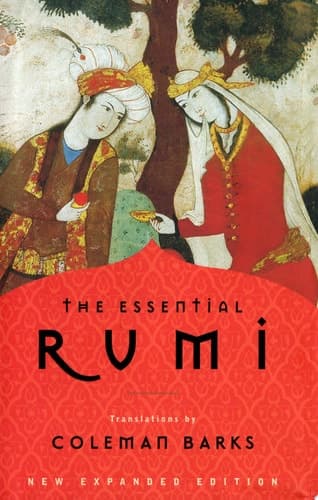
The Essential Rumi - reissue New Expanded Edition
by Coleman Barks
Since you encountered Rumi's work in Armstrong's anthology, this complete collection lets you experience the full luminosity of his mystical poetry without the thematic framing. Barks's translations have that same accessible-yet-profound quality that made Tongues of Fire so readable, and you'll discover how Rumi's ecstatic voice moves across love, loss, and the divine in ways that feel startlingly contemporary.
View book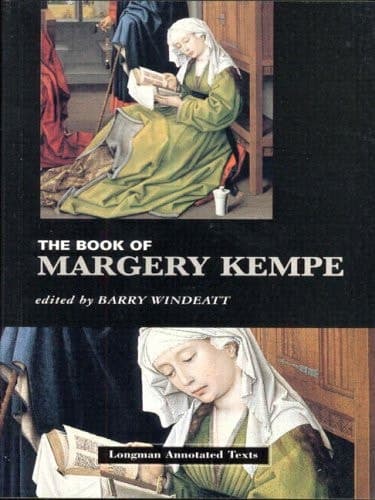
The Book of Margery Kempe A New Translation, Contexts, Criticism
by Barry Windeatt
This is a genuine surprise—a 15th-century spiritual autobiography that reads like raw, unfiltered religious experience rather than polished theology. Where Armstrong curates and contextualizes, Kempe's voice is messy, contradictory, and utterly alive; her weeping, her visions, her arguments with clergy give you the texture of lived faith in a way that anthology selections can't quite capture.
View book
The Struggle for Life A Companion to William James's The Varieties of Religious Experience
by Donald Capps
Published in 1902, this foundational work does something Armstrong's anthology gestures toward but doesn't fully explore: it treats religious experience as a psychological and human phenomenon worthy of serious study, using case studies and first-person accounts that feel remarkably similar to the testimonies woven through Tongues of Fire. James writes with genuine curiosity rather than skepticism, and his framework helps you understand *why* these experiences matter across traditions.
View book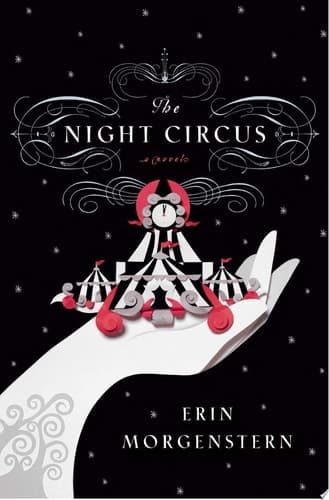
The Night Circus
by Erin Morgenstern
This might seem like a left turn, but hear me out: Morgenstern creates atmosphere through layered, poetic language the way Armstrong's poets do, and the novel's central magic is fundamentally about transcendence and competing visions of the sacred. It's a "surprise" recommendation because it's fiction rather than poetry or theology, yet it captures that same sense of wonder and spiritual yearning that runs through Blake and Rumi.
View book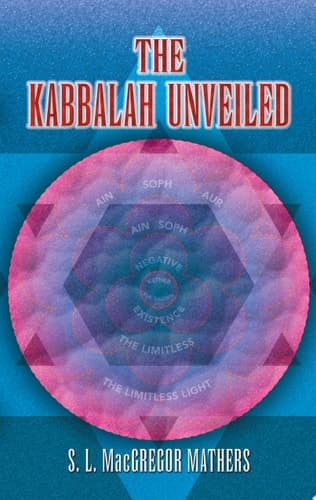
The Kabbalah Unveiled
by S. L. MacGregor Mathers
If you're drawn to the mystical strands in Tongues of Fire—particularly the Kabbalistic and Sufi elements—this translation of the Zohar gives you direct access to Jewish mystical thought in its most poetic form. Mathers's Victorian-era translation has an archaic beauty that complements the anthology's literary sensibility, and you'll see how the same impulse toward divine union appears across traditions in remarkably parallel ways.
View bookAbout Karen Armstrong
K
Karen Armstrong
Born 1944
Karen Armstrong is a British author and commentator known for her books on comparative religion. A former Roman Catholic religious sister, she went from a conservative to a more liberal and mystical Christian faith. - Wikipedia
View author page