
Toni Morrison - Beloved
Carl PlasaPublished2000
Pages161
Formatpaperback
PublisherMacmillan Education UK
Synopsis
In this Readers' Guide, Carl Plasa presents and analyses the most important writings on Morrison's novel, beginning with a discussion of the novel's reception and a consideration of selected interviews with Morrison in the years following publication. Chapters are given to critical writings on the supernatural element of the work, with extracts from Deborah Horvitz, Elizabeth B. House and Pamela E. Barnett, and to treatments of the physical self, with essays from David Lawrence and Kristin Boudreau. In the final chapter, the Guide considers criticism which has focussed on postcolonial and postmodern perspectives. Throughout, Carl Plasa's narrative contextualises and clarifies the critical material on this complex and important work.
Recommendations

Ralph Ellison - Invisible Man
by Anke Balduf
Like Plasa's guide to Beloved, this novel wrestles with how identity is constructed through the eyes of others—but Ellison approaches it through a nameless protagonist navigating American society rather than through the supernatural. The layered, allusive prose style demands the same kind of active reading you've just practiced, where meaning accumulates through careful attention to what's unsaid.
View book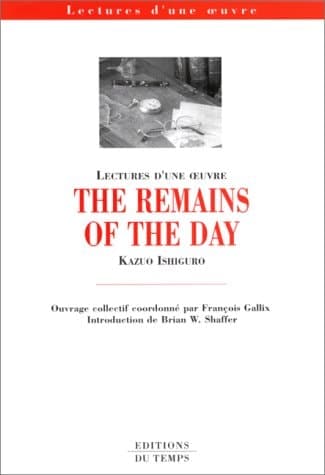
The remains of the day de Kazuo Ishiguro
by Gallix/François
This is my surprise pick for you: while it's not overtly supernatural like Beloved's ghost, Ishiguro creates an uncanny atmosphere through what his narrator refuses to acknowledge about his own past. The way trauma operates beneath the surface of polite restraint gives you that same unsettling sense of something haunting the present—just expressed through English understatement rather than magical realism.
View book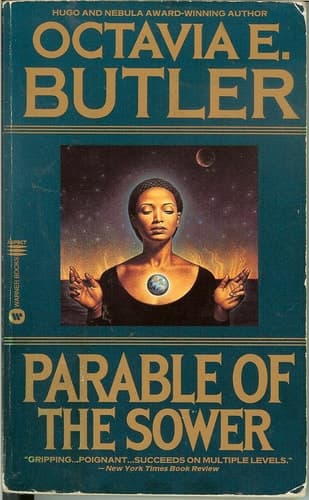
Parable of the Sower
by Octavia E. Butler
Butler builds a speculative future that feels as grounded in historical and social reality as Morrison's historical fiction does—she's not interested in escapism but in how systems of power shape individual lives. The novel's exploration of community, survival, and spiritual resilience echoes the themes you've been analyzing in Beloved, but through a science fiction lens that lets her examine similar questions from a different angle.
View book
The Apocalyptic Vision of Mikhail Bulgakov's the Master and Margarita (Studies in Slavic Language & Literature)
by Edward E. Ericson
Published in 1967 (well outside the contemporary moment of Beloved scholarship), this Russian novel shares Morrison's willingness to blend the supernatural with historical reality—here, the Devil arrives in Soviet Moscow alongside a retelling of Pontius Pilate's story. Like Beloved, it demands you hold multiple timelines and realities in mind simultaneously, and its political allegory operates on the same principle that personal trauma reflects larger historical wounds.
View book
Homegoing
by Frederik Pohl
Gyasi traces two family lines across centuries and continents, using the structure itself as a way to explore how historical trauma reverberates through generations—much like how Plasa's guide helps you understand Beloved's fragmented narrative as inseparable from its content. What makes this different is Gyasi's deliberate, almost genealogical approach: you're watching how individual choices and systemic forces shape descendants who may never know each other's stories.
View bookAbout Carl Plasa
C
Carl Plasa
Born 1959
Biography coming soon.
View author page