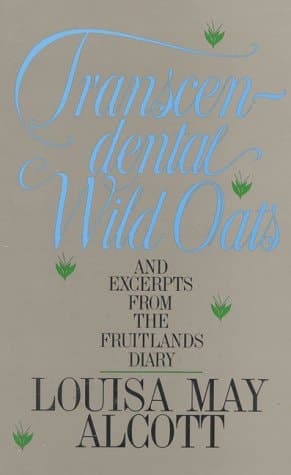
Transcendental Wild Oats and Excerpts from the Fruitlands Diary
Louisa May AlcottPublished1981
Pages92
Formatpaperback
PublisherHarvard Common Press
Synopsis
He set out to make his utopian dream come true -- Bronson Alcott, his wife and four daughters, and an odd assortment of friends who knew more about philosophy than they did about farming. Would their experiment at Fruitlands last through the hard New England winter? Louisa May Alcott's classic satire on her father's Transcendentalist commune is for readers of all ages who love Alcott, history, or just a good story told with humour and sensitivity.
Recommendations
Generating recommendations…
Our AI is preparing recommendations for Transcendental Wild Oats and Excerpts from the Fruitlands Diary. This usually takes under a minute.
About Louisa May Alcott
L
Louisa May Alcott
1832–1888
Louisa May Alcott was born in Germantown, Pennsylvania on November 29, 1832. She and her three sisters, Anna, Elizabeth, and May, were educated by their father, philosopher and teacher Bronson Alcott, and raised on the practical Christianity of their mother, Abigail May. Louisa spent her childhood in Boston and in Concord, Massachusetts, where her days were enlightened by visits to Ralph Waldo Emerson’s library, excursions into nature with Henry David Thoreau, and theatricals in the barn at "Hillside". Like her character, "Jo March" in Little Women, young Louisa was a tomboy. "No boy could be my friend till I had beaten him in a race," she claimed, "and no girl if she refused to climb trees, leap fences ..." For Louisa, writing was an early passion. She had a rich imagination and often her stories became melodramas that she and her sisters would act out for friends. Louisa preferred to play the "lurid" parts in these plays --"the villains, ghosts, bandits, and disdainful queens." At age 15, troubled by the poverty that plagued her family, she vowed: "I will do something by and by. Don’t care what, teach, sew, act, write -- anything to help the family; and I’ll be rich and famous and happy before I die, see if I won’t!"
View author page